
 Login
Login


20. April 2017
The heroine and the contaminated groundwater
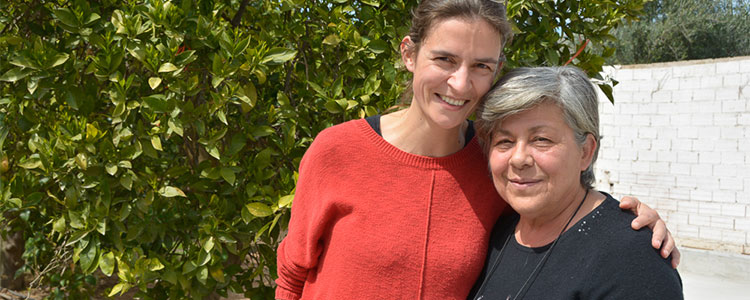
“What impressed me most was the encounter with the orange farmer Chrysoula Stergiou: Anyone who manages their fields organically for 15 years, accepting extra work and lower yields without receiving a corresponding price, is in my eyes a heroine.
There were repeated financial tight spots for the Stergiou family. But Chrysoula remained stubborn and stuck to organic farming. Her perseverance was rewarded – albeit late: For 5 years now her son and daughter and their husband, in collaboration with gebana, have been exporting the Stergious' oranges to Switzerland, Germany and Austria. Since then the Stergiou family has received prices that even exceed the market price for organic oranges.
What shocked me most in a negative way was the fact that the groundwater in the Argolida region, where our oranges grow, is no longer drinkable. The reason is a too-high nitrate content as a result of over-fertilization. Especially in the 1980s, when Greek farmers benefited from EU agricultural subsidies that led to mass and even overproduction, large amounts of fertilizer entered the soil. And even today the Argolida plain is intensively fertilized; unfortunately organic farmers are still a small minority.
Fortunately the EU has since changed its approach and is increasingly focusing its subsidies on quality rather than quantity and promoting organic farming. At the beginning of this year there was a one-time kick-start funding for farmers to convert to organic agriculture. This, and above all the purchase of organic products at fair prices, can make an important contribution to more sustainability in the region's agriculture.
Let us hope that what Chrysoula Stergiou knew 20 years ago, namely that organic is better for people and nature, will soon find broader recognition in the region. That would not only be good for the groundwater.”