
 Login
Login

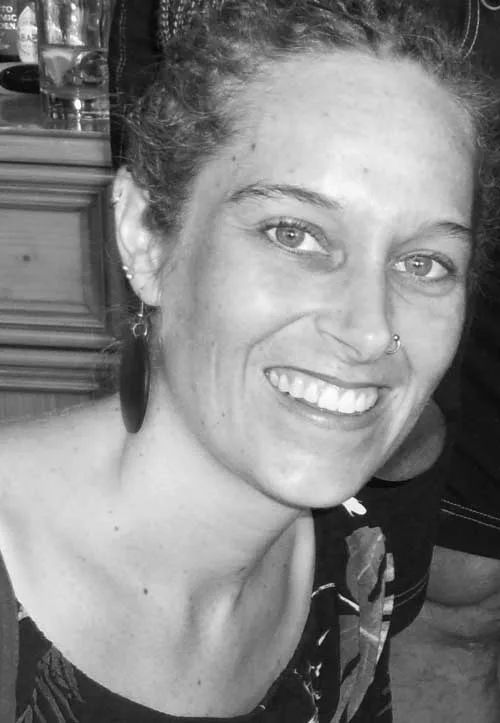
gebana: What was your goal in traveling to Burkina Faso?
Linda Dörig: My goal was to present the new sustainability strategy to the local management, involve them and begin implementation. For this we determined the current status in the various areas in workshops and thus identified where catch-up is needed.
How was the inventory carried out?
To determine the current status we defined questions, over 60 in total. Collecting these is not new, we have been doing this for years for gebana’s sustainability report. But the boundaries still need to be defined more precisely in some places. For example, if the metric is: “Number of farmers we work with”, we must decide whom to count: all farmers from whom we buy, or those listed on our own organic certificate? (Ed. note: we usually train more farmers than ultimately supply us; some cooperatives have their own organic certificate)
Where did you identify a need for action?
One of the two main issues is employment contracts and wages: like all companies here, we have very few permanent employment relationships. If we now increasingly produce year-round, seasonal workers are practically present all year, but have the disadvantage of a seasonal employment contract, so for example they do not get a loan from the bank. But what happens if you convert all these contracts into annual contracts and after a bad harvest there is no work after seven months? Of course wages were also an issue. The goal is living wages. But even after massive improvements we are not there yet.
Another focus will be agronomy: we want to introduce more innovative training, a holistic approach and new technologies, as well as cultivation techniques. This should allow organic farming to deliver better quality and yields and thus become more attractive. Concretely it concerns questions such as: What is the best organic fertilizer? Which soil analyses make sense? Here we first look at which know-how is already available internally and where we should work with experts.
How did the local management react to these changes?
The reactions regarding both projects related to costs. Who pays for more and better farmer training? After all, gebana Burkina Faso is a company that only recently overcame a financial crisis.
It was important for me to show that our new sustainability strategy is actually a more intensive development of our previous work.
A major innovation is distributing 10% of sales to the farming families. What were the reactions to this?
Very positive, because this is expected to bring a real improvement for the farming families. However, there were also many questions, especially regarding implementation. The question is who exactly receives this surcharge: all farming families on our organic certificate or only those who delivered to us? The HOW is the next question. We are discussing payment via mobile phone, as we do with the organic premium in Togo. However, we are not yet that advanced technically in Burkina Faso. Distributing the money in person is also too insecure, as our employees carrying large amounts of cash would be at increased risk of robberies. Perhaps an event after the harvest is the solution. The timing must also be considered, because in September school fees and the laborers for pruning the trees must be paid.
How big will the difference for the farming families actually be?
There will definitely be a noticeable difference! One example: In 2018, gebana direct shipping sold around 25 tons of cashews and 14 tons of mangoes. A revenue share of 10% therefore amounts to approximately 75,900,000 CFA, which corresponds to about 129,000 Swiss francs. If we distribute this among all 2,700 farming families on the organic certificate – equally, regardless of how much they delivered – each would receive about 27,800 CFA. The national minimum wage for employees is 33,000 CFA. Each farming family would thus receive roughly an additional employee monthly wage, one time. Or put differently: If the premium went only to the farming families who delivered to direct shipping – that is about 10% – then these would receive roughly double for their nuts at current farm-gate prices.
What could be positive or negative “side effects”? We are thinking of corruption or increased motivation to work with us...
As a side effect we hope that young people will see that it can indeed be worthwhile to engage in agriculture. Hopefully more will be invested in more efficient and even more sustainable organic cultivation. The loyalty of the farming families towards gebana will also increase.
Besides all the positive effects, of course there is also the danger of more corruption, mismanagement and envy. That is why direct payment to the farming families is so important and also that everyone benefits equally – so also the farming families whose products are sold to wholesale and not only those who deliver to the gebana direct shipping.
What is special about implementation in Burkina Faso?
At gebana Burkina Faso we have comparatively many employees compared to other subsidiaries and buy from many farming families. For the employees, despite the large losses in recent years, small but continuous improvements – for example in employment contracts, wages, daycare and clinic – have been made and are recognized. But there is still much to do. With the farming families we built a very intensive collaboration especially last year. On this basis we can now build further.
Therefore the focused sustainability strategy is not something completely new to me – except for the revolutionary 10%! It is more like putting on a new pair of glasses: Suddenly you see more clearly where there is still work to be done. You see it from a new perspective and pay even more attention to the aspects that are important to gebana. From this follows a plan and the measurement so that we can track the impact and also communicate it.
What does this mean for your work?
I think we should remain realistic and pragmatic. Theoretical concepts must be adapted to the conditions on site. Because every place is different – often highly complex – and there are many different ways to do the same thing. To be successful in the long term, it is necessary to take small steps consistently and with a lot of persistence, rather than hastily bending something so that it looks good from the outside.
It is precisely a clear strategy that gives me the opportunity to constantly question and push our actions further. We should never stand still. In the spirit of Ursula Brunner, who said that fair trade is a process, not a state.