
 Login
Login

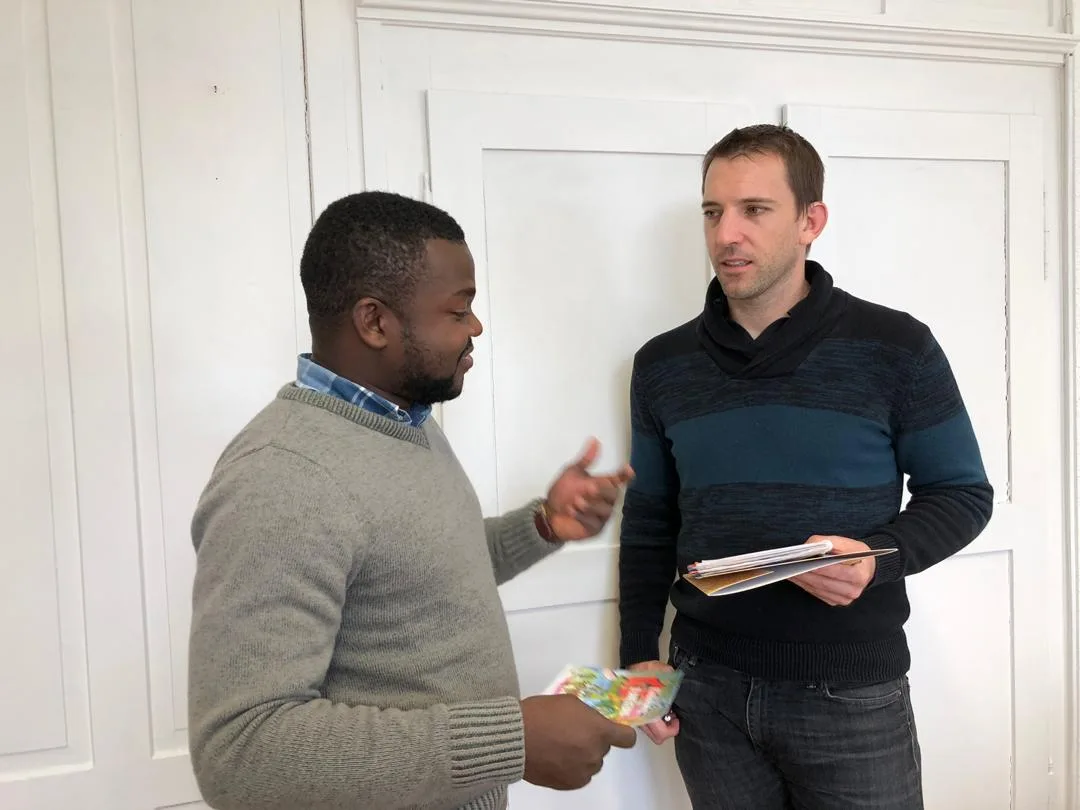
gebana: Cooperatives are repeatedly criticized. And yet they are indispensable for Fair Trade. Can you explain the connection?
Michael: According to FLO Fair Trade standards, smallholder farmers must be organized in a group or cooperative in order to be certified. The reason for this requirement is that they thereby have greater bargaining power against large buyers.
That sounds good at first. From your perspective, what are the problems?
Michael: Cooperatives definitely have their good points. They support communication with the farmers and if they invest the Fair Trade premium in something meaningful for all members, then that is good.
Patrick: Unfortunately, this is not always the case. The cash flows of the cooperatives are often not transparent. Whether it is the use of the Fair Trade premium or the payment of the farmers. The cooperative collectors who pick up the cocoa from the farmers, for example, often pocket money themselves: they cheat when weighing the cocoa or tell the farmer that his product is of inferior quality and therefore he will receive a lower price. These tricks are difficult for the farmer to detect. That is why it is so important to us at gebana Togo to buy directly from the farmers and pay them directly. Only this way do we have control that the money actually reaches the farmer in full. In our main growing region Kpalimé we already pay 80% of the farmers directly, that is, not through the cooperative. In the Badou region, where we have only been working recently, it is 35%. We want to reach 100% everywhere in the future.
Buying directly from the farmer instead of through the cooperative means a loss of power for the cooperative. How were you able to move the cooperative to that?
Patrick: That was a hard fight! The cooperative even stopped delivering cocoa to us that they had already prefinanced. But more and more farmers realized that they benefited when they delivered directly to gebana: properly calibrated scales, correct prices. This increased the pressure on the cooperative. Eventually it agreed to let us buy directly from the farmers.
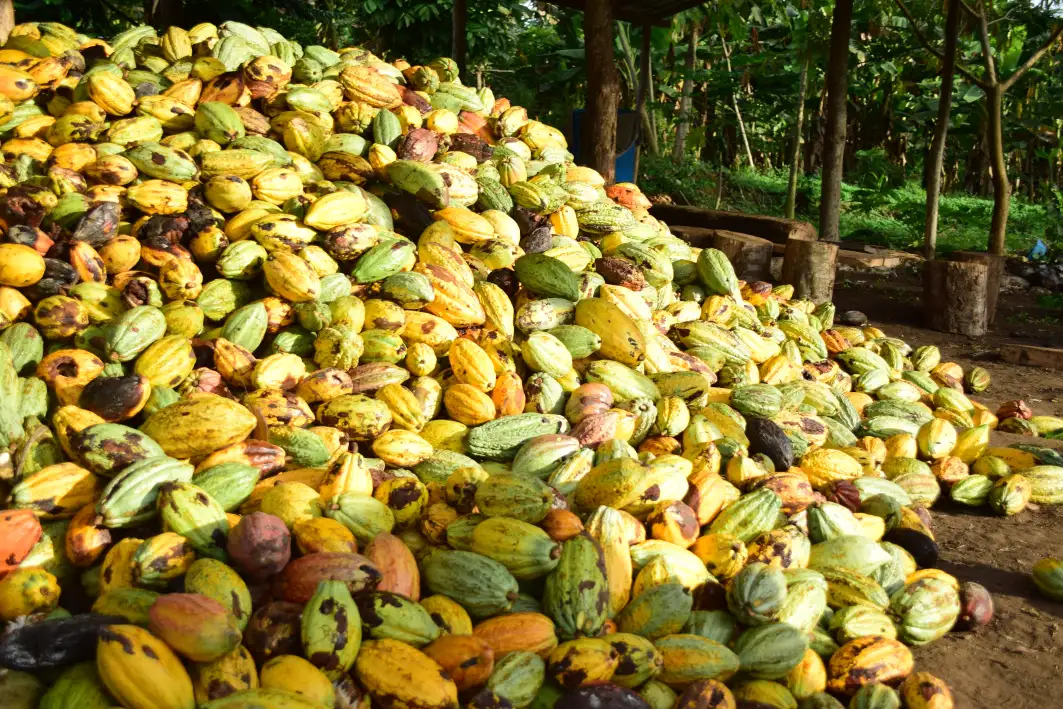
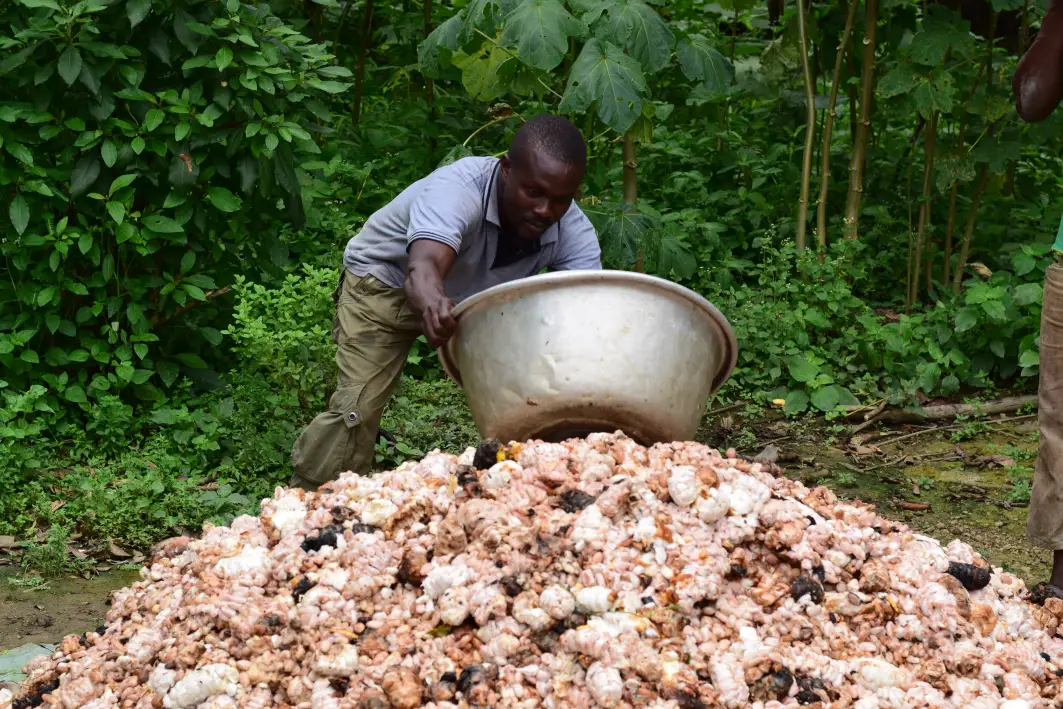
You also mentioned the use of the Fair Trade premium. Shouldn't this be transparent, after all it is audited by an external certification body?
Patrick: Yeah..., but the external bodies check the invoices. And as the saying goes: "paper is patient." And in Togo that also applies to invoices. For example, excessively high amounts are billed. An external auditor who comes once a year from another context won't notice that.
From your point of view, are cooperatives even sensible as a form of organization?
Michael: In principle yes – but while they are historically rooted in Latin America, here in West Africa they are an "imposed" form and not anchored in society at all. Clan thinking still prevails here, and democratic structures have no tradition. The cooperatives repeatedly ask us for help with organization.
Patrick: That's a management problem: in the leadership of a cooperative and any other organization you need the right people. A person with a vision who wants to advance the whole thing – the community, the region. But most leaders here are all too often only interested in power and their own family. Of course that also has to do with education...
Next week you can read the second part of the interview here about the topics of poverty, income and child labor.