
 Login
Login

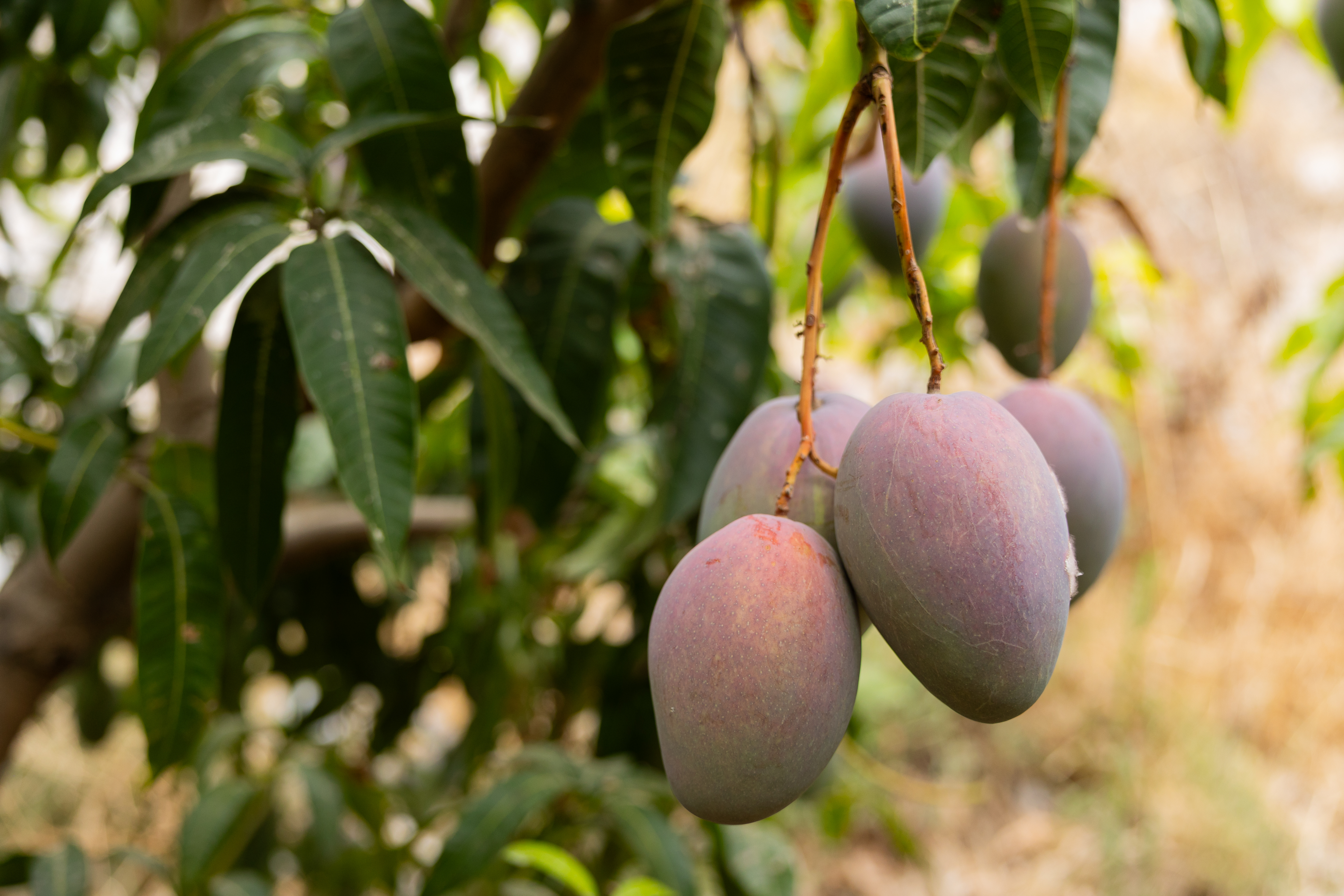
If you have ever eaten a fresh mango, a properly ripe, fragrant mango, then you know: there is no substitute for that taste. The problem with our fresh mangoes is: we only have them for two months of the year.
This short season should be longer in the future. With mangoes from Europe, specifically from the region around the Spanish town of Motril. Spanish agriculture, however, has the reputation of exploiting farm and harvest workers and plunging the whole country into water scarcity.
Against this background, it is daring for gebana to come up with the idea of sourcing fresh mangoes from there. Of course we do not buy the fruits from just anyone, but from producers certified to high standards. But is that enough?
We found: No, we had to see for ourselves. And that is exactly what we did. At the beginning of September 2026 a small delegation from gebana traveled to Motril on the Costa Tropical and visited the Procam cooperative that supplies us with the fruits.
For further reading: What went wrong in southern Spain
The name that repeatedly comes up around the dramatic conditions in Spanish agriculture is Almería: the “sea of plastic”, greenhouses for kilometers, reports of precarious and illegal working conditions, synthetic fertilizer in supposedly organic-certified crops, water stress. These challenges are well documented. The EU introduced an organic regulation in 1991, conversion subsidies were added from 1996 – but the real change came slowly, and it affects not only the organic label: stricter rules on soil treatment (ban of certain soil disinfectants) have also changed conventional agriculture.
Recommendations
- Arte – Re: The sea of plastic of Almería
- taz – Organic vegetables from Spain
- SRF Kassensturz – Exploitation in the greenhouse
- Der Bund – Five euro hourly wage
- Heinrich-Böll-Stiftung – Vegetable cultivation in Spain
Important: Almería, where these scandals are concentrated, and Motril/Costa Tropical, where Procam is located, are in two different provinces of the same region Andalusia – but in the media they are often lumped together as “southern Spanish agriculture”.
We meet a pioneering cooperative
The cooperative Procam was founded in 1983. At that time all members still farmed conventionally. The switch to organic cultivation took place between 2006 and 2007. In the cooperative's premises in Motril there is even a commemorative plaque: first "diez años" (ten years), then "veinte de ecológico" (twenty years ecology). Laura Fajardo, coordinator of the trade department, whom we meet on site, puts it succinctly: "We were one of the first companies in the region to take this step toward organic farming."
The real organic boom in Andalusia only began after 2020: within just three years the number of organic farms increased by 35 percent according to a report by the Andalusian government. Procam was therefore already 15 years ahead. And that in a region strongly shaped by agriculture. Agriculture accounts for 36.5 percent of businesses on the Costa Tropical (compared to 22 percent in the Andalusian average).
Laura Fajardo describes what the conversion concretely meant for the cooperative: "What changed is our view of production. We had to learn to work much more preventively instead of reactively, focusing on soil health, biodiversity, disease prevention and the natural balance of the crops."
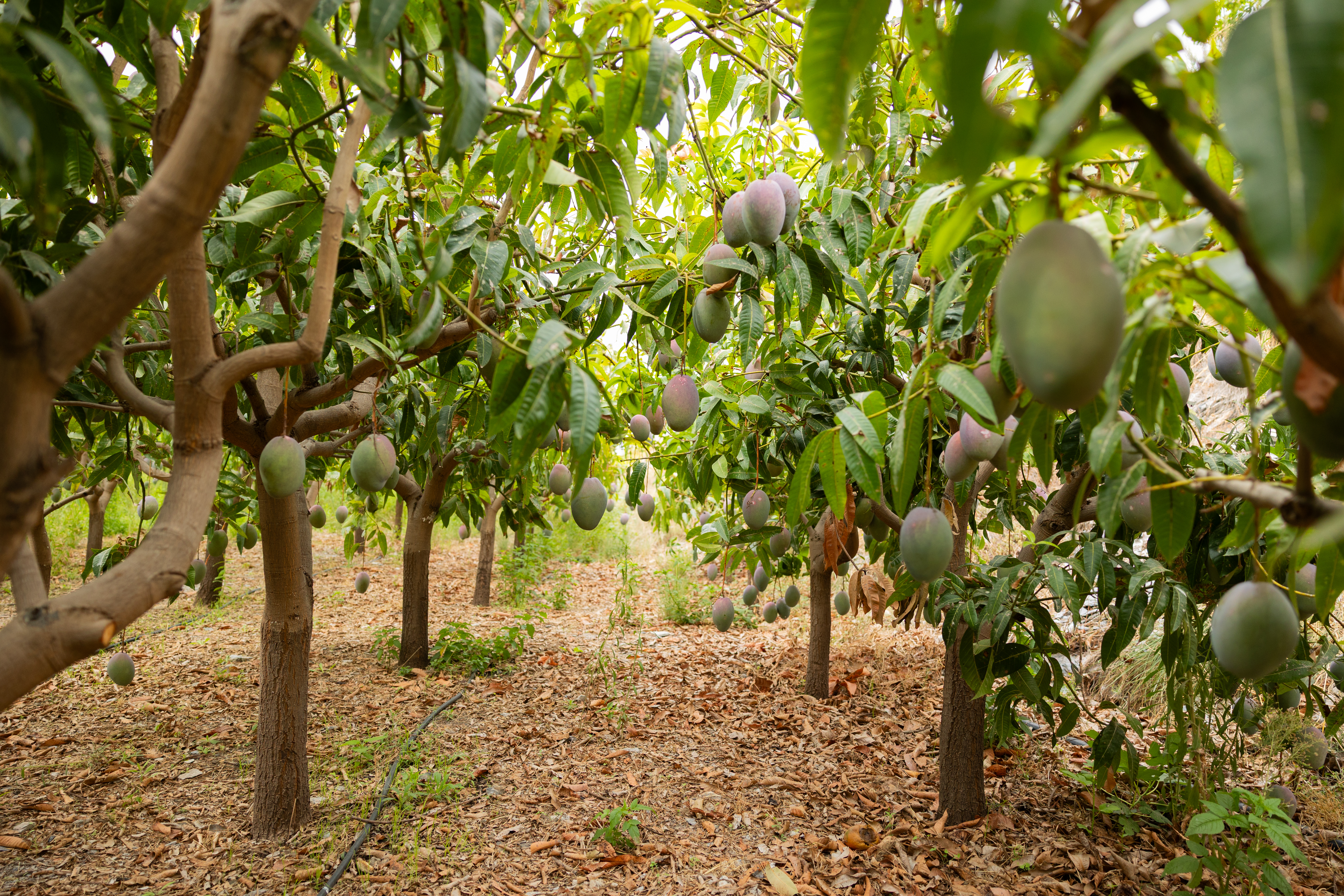
Procam’s mangoes are organic certified – a demanding specification, both ecologically and socially. What does it look like on site? In one of the fields we visit it is concrete: around 70 percent of the area is left to nature, with hillside vegetation and protected pine trees. The branches cut before flowering are shredded and left as mulch on the ground. That feeds it and protects it from erosion.
The right support for independent producers
In the fields we meet two experts from the cooperative. Eduardo Maldonado, an agricultural technician, has been associated with Procam for over 25 years – his father also worked there – and Manuel Barba. He is also a technician and a farmer. He chose organic farming "to care for the soil, the plants, and to leave a healthy soil and a healthy attitude to future generations."
Asked for the word that best describes their work, both answer: perseverance. Eduardo Maldonado explains this with the rarity of their profile: their certifications – EU Organic, Bio Suisse, GLOBALG.A.P. and Naturland – require very specific training. "There are not many people in the industry who master all of that at the same time," he says.
Both supervise and support Procam's roughly 200 members. Concretely, that means helping the producers obtain their certifications and planning their crops so that mangoes, avocados and vegetables can reach the market at the right time.
In case of crop failures, the cooperative provides targeted support, including advice for the producers. The cooperative's team shows them how to apply for state aid and checks whether the operation meets the requirements.
The cooperative only asks its members for enough to cover its costs. From the sale price it deducts only costs for ongoing operations, such as packaging, transport and the wages for the technicians and advisory functions. “The rest goes entirely to the farmers," says Laura Fajardo.
The central question of water
One of the reasons for our visit: irrigation. Water is also scarce on the Costa Tropical. Groundwater reserves are under pressure, and in some places seawater intrudes. That is why we ask specifically where the water for our fruits comes from.
On the subject, Eduardo Maldonado describes a system that is much more regulated than one might think: "Water distribution here in our area runs through the southern river basin authority, the official body that regulates the irrigation communities – they are ultimately the ones who supply agriculture." Concretely, each operation has a meter, visible at the farm entrance, that records total consumption.
Regarding the source of this water, Eduardo Maldonado emphasizes a point that distinguishes the region: "The source is the Sierra Nevada – an area with a lot of snow that continuously supplies us with water." The result, at the time of our visit in the middle of late summer: "We are already in September and have passed the most critical phase of summer. In our region the Rules reservoir currently has a fill level of 92 percent, the neighboring reservoirs around 74 percent; thus we have a reliably secured water supply."
We must not forget that these water reserves are filled by the melting of the snowpack. Climate change accelerates this melting. These snow reserves are as finite in Spain as the glaciers in Switzerland. We must and will monitor this development closely should mangoes from Spain secure a permanent place in our assortment.
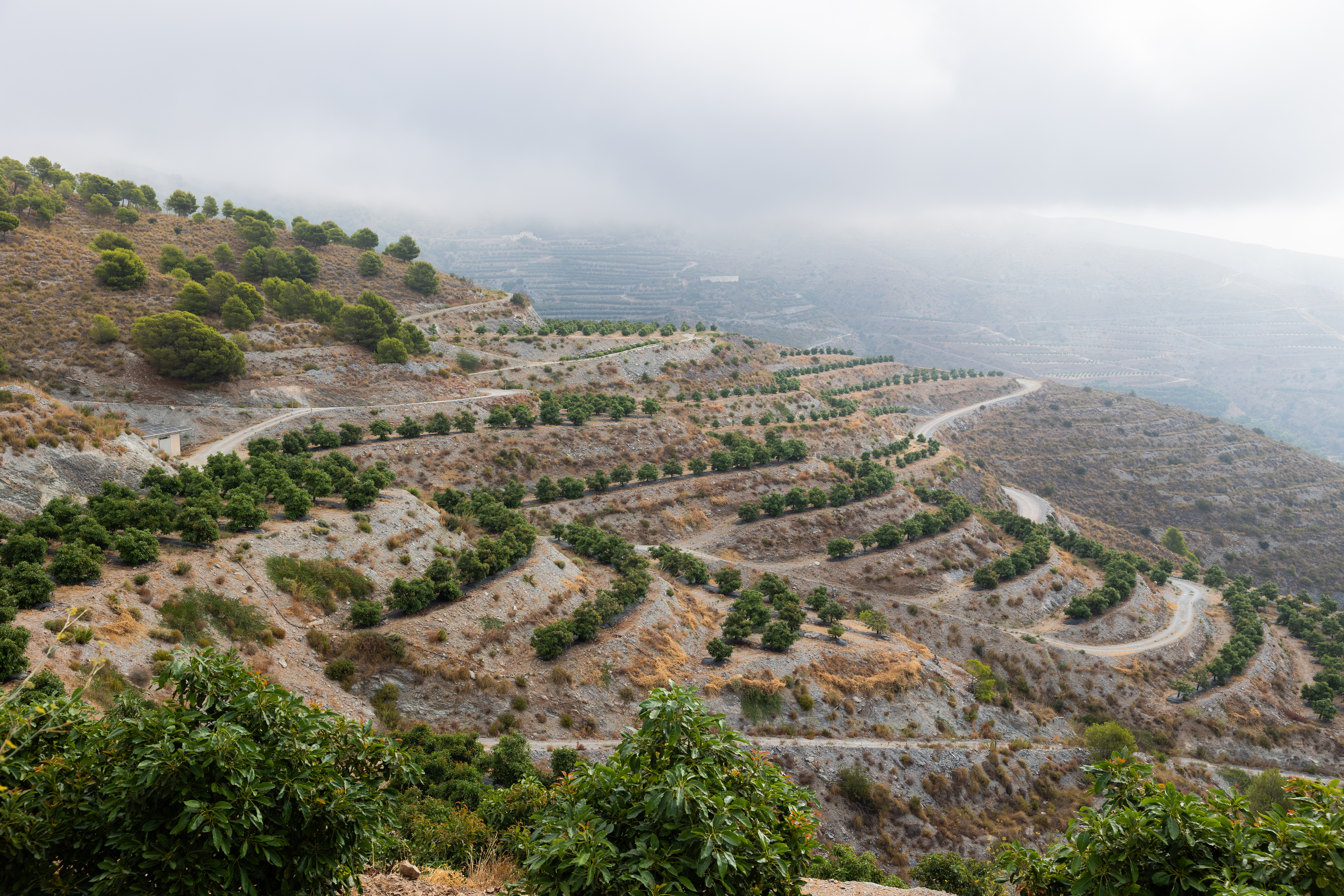
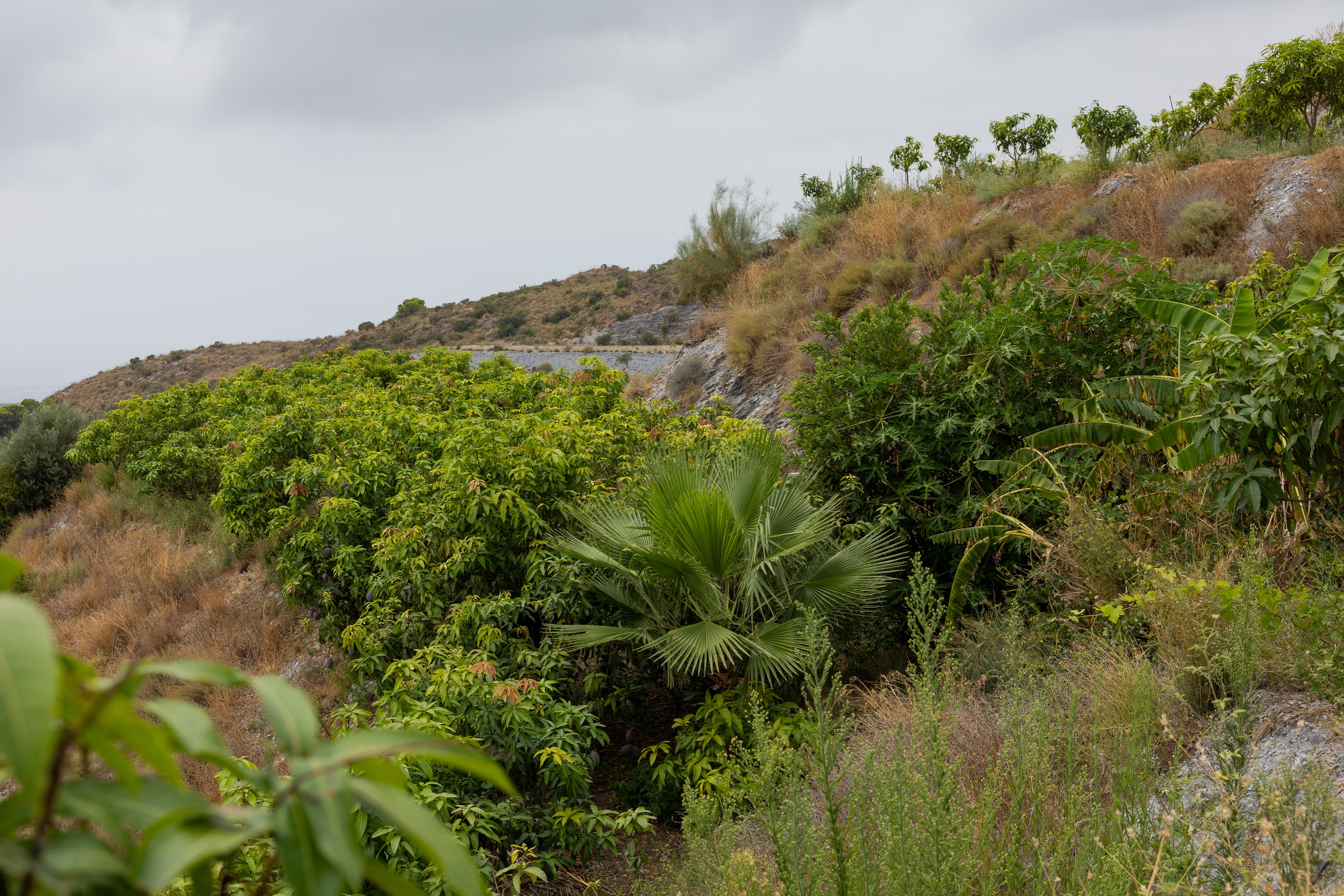
The terraced fields of Procam lie on the slopes above the sea, amidst a barren, dry-looking landscape. This naturally raises the question of water (avocado trees can be seen in the first picture).
And what about the workers?
The question about working conditions in the fields and during the harvest is already answered by Procam before we can ask it. "We don’t employ migrant workers," says Laura Fajardo. "They are usually people from the region who return year after year – some have even settled here."
Regarding social audits, Procam’s producers are GLOBALG.A.P. certified and are additionally assessed according to GRASP (GLOBALG.A.P. Risk Assessment on Social Practice). This additional module goes beyond occupational safety and also checks labour and human rights, worker representation, and the protection of children and young workers. Eduardo Maldonado speaks of regular checks every six months: "The last inspection by the responsible certification body at the beginning of June was satisfactory. We had no deviations." He adds: "All contracts are in order, time tracking is correct, there were no workplace accidents."
Mangoes for whom?
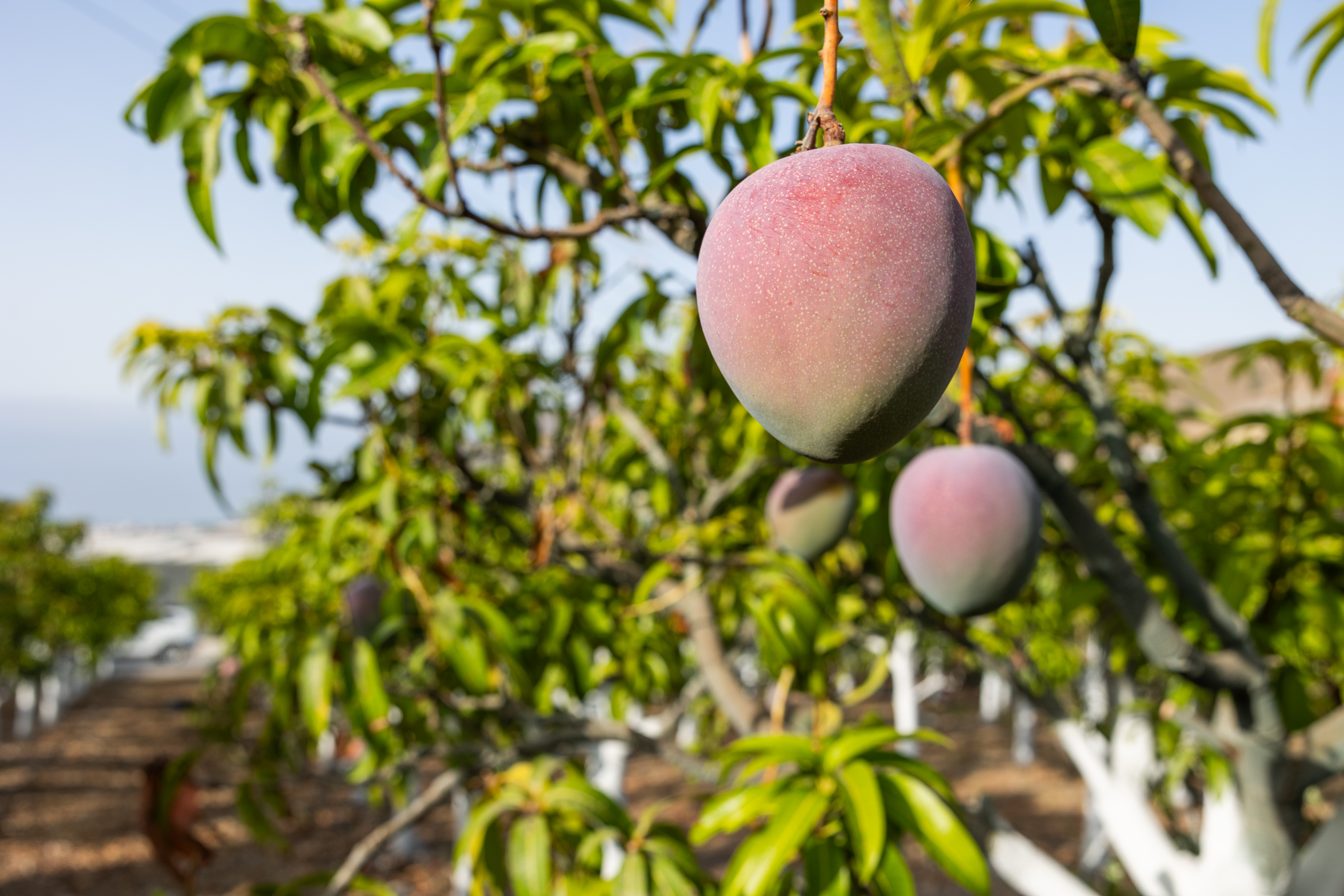
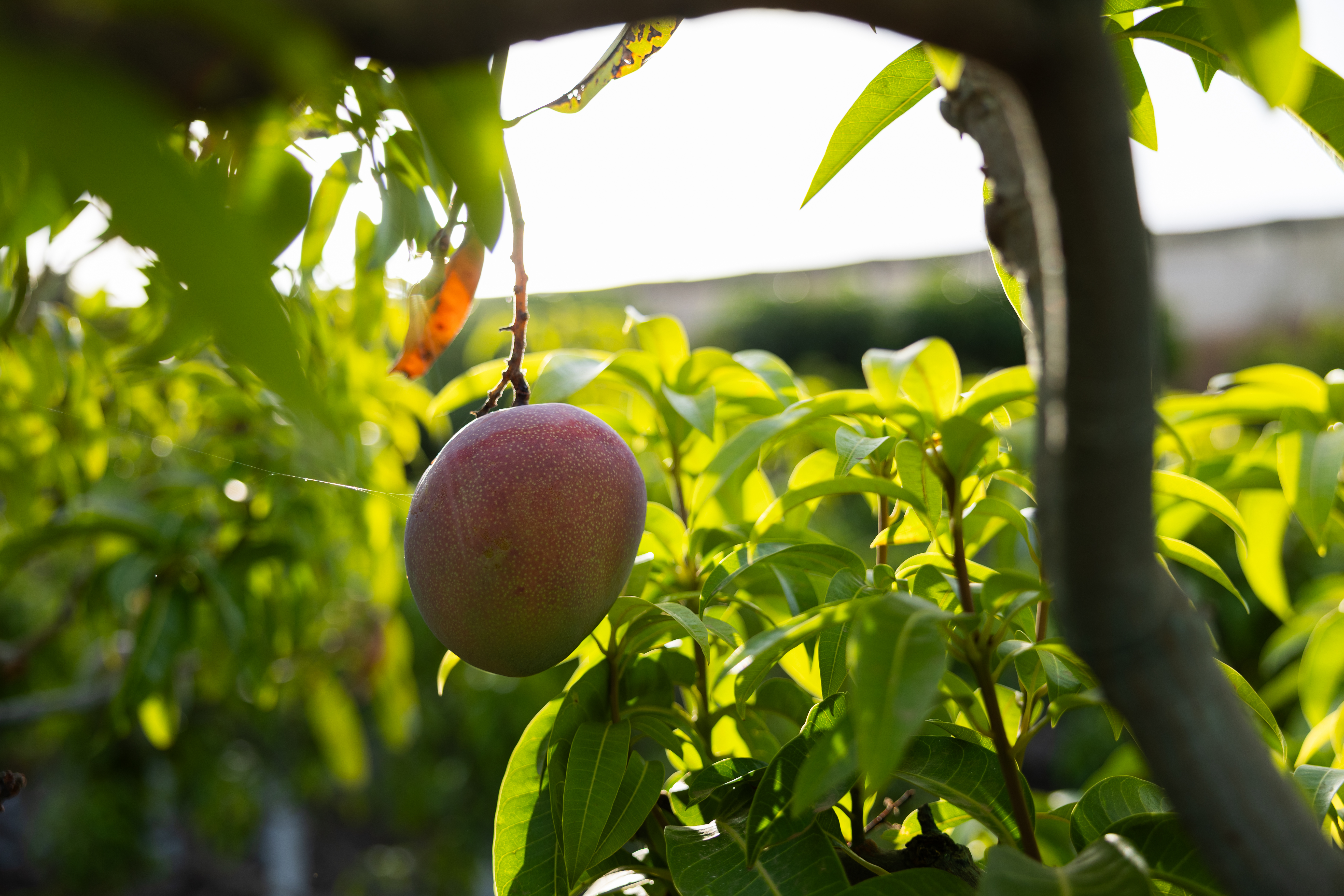
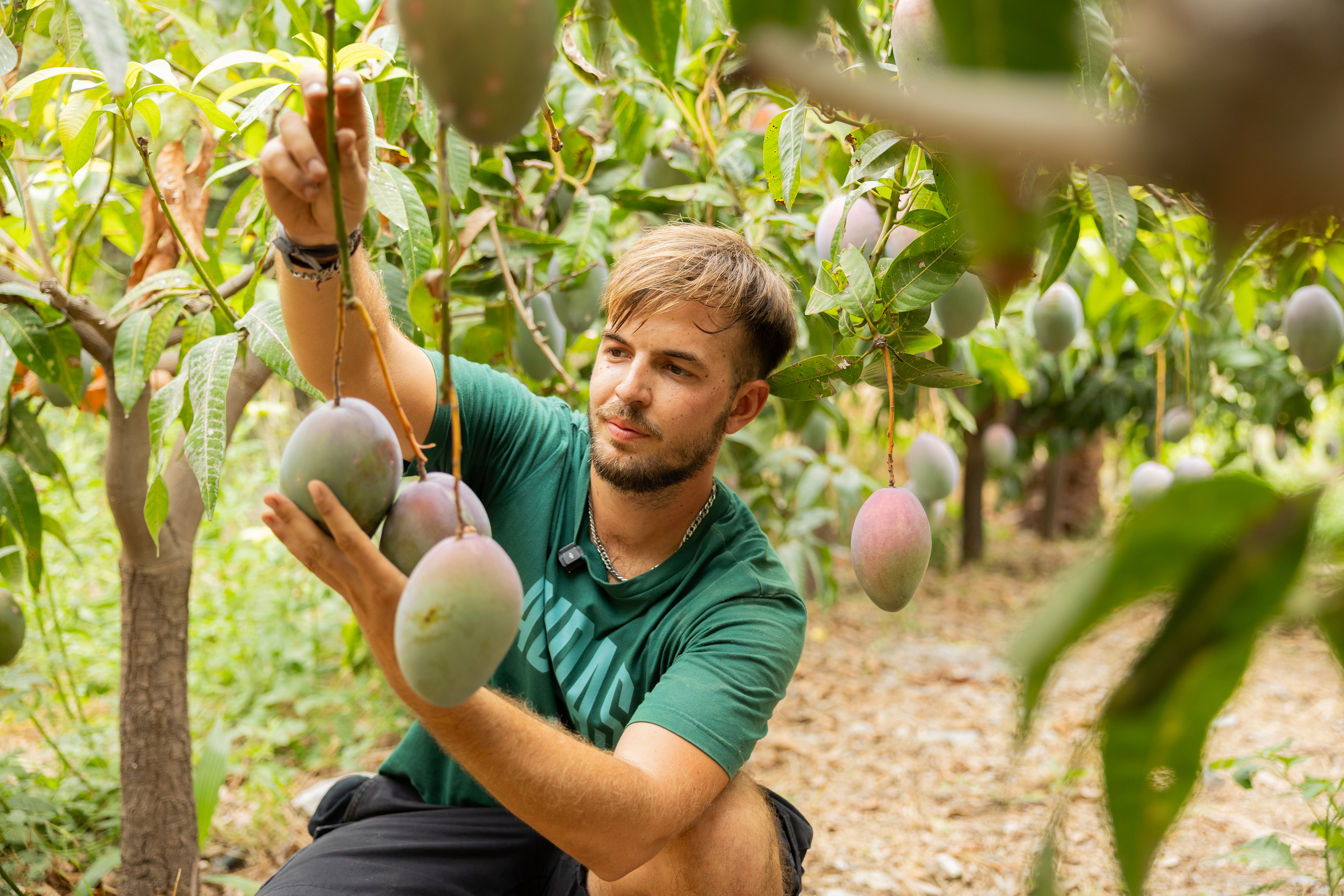
Of the 200 producers at Procam, only five grow mangoes. They cultivate the Osteen and Keitt varieties, which thrive in the climate of the Costa Tropical and have a balanced flavour profile with balanced sweetness and acidity. Osteen ripens early, Keitt late. The latter makes it possible to extend the harvest from September to November instead of concentrating it into a few weeks.
Why do only five of them grow mangoes? Demand for mangoes from southern Spain is still small. And it mainly comes from abroad: 95 percent of Procam’s production – mostly avocados, but also tomatoes and cucumbers – goes to export. Only a small remainder goes to local organic shops. Locally, price often remains the deciding criterion for consumers – those who opt for higher-quality food tend to grow it themselves.
Regardless of this conflict, the members of Procam demonstrate that real change in agriculture is possible and that our image of Spain in this regard is too one-sided. Whether that is enough for Spanish mangoes to be included in the gebana assortment will be decided at the end of the season. Your feedback will also play an important role.
Sources used
Junta de Andalucía, Consejería de Agricultura, Pesca, Agua y Desarrollo Rural. Organic Production of Andalusia – Balance 2024. 2025. cdn.juntadeandalucia.es/.../DECO25_Balance_estadistico_2024_v2.pdf (accessed 24.09.2026)
Universidad de Granada (UGR). A UGR study analyzes the contribution of the agri-food sector in the Costa Tropical to the economy of the province of Granada. December 2022. canal.ugr.es/.../un-estudio-de-la-ugr-analiza... (accessed 24.09.2026)