
Go to homepage
Global Farmers Market
Shop
Fruits & Vegetables
Citrus Fruits
Exotic Fruits
Other Fruits
Vegetables
Chocolate & Snacks
Chocolate
Bars
Salty Snacks
Nuts & Kernels
Cashews
Hazelnuts
Almonds
Macadamia
Brazil nuts
Pistachios
Walnuts & Pecan Nuts
Nut Mix
Other Nuts & Seeds
Dried fruit
Mangos
Dates
Figs
Raisins
Pineapple
Apricots
Prunes
Fruit Mix
Other Dried Fruits
Pantry
Oil & Vinegar
Passata & Pelati
Pasta
Spreads & Nut Butter
Rice & Grains
Pulses
Muesli & Flakes
Flour, Sugar & Cocoa
Preserves & Canned Goods
Spices
Beverages
Coffee
Tea
Juice
Gifts & Storage
Gift Sets
Gift Voucher
Food Storage
Promotions & Discounts
New Products
Changing the rules
Changing the Rules
We trade differently
We create impact
We share
We take high risks
You buy differently
Buy in bulk
Buy seasonally
Recipes
Crowd Projects
We are gebana
About gebana
Farmers & Places
Team
Blog
Login
Forgot your passwort?
Create an account
What do you want to search for?
  • Shop
    • Fruits & Vegetables
      • Citrus Fruits
      • Exotic Fruits
      • Other Fruits
      • Vegetables
    • Chocolate & Snacks
      • Chocolate
      • Bars
      • Salty Snacks
    • Nuts & Kernels
      • Cashews
      • Hazelnuts
      • Almonds
      • Macadamia
      • Brazil nuts
      • Pistachios
      • Walnuts & Pecan Nuts
      • Nut Mix
      • Other Nuts & Seeds
    • Dried fruit
      • Mangos
      • Dates
      • Figs
      • Raisins
      • Pineapple
      • Apricots
      • Prunes
      • Fruit Mix
      • Other Dried Fruits
    • Pantry
      • Oil & Vinegar
      • Passata & Pelati
      • Pasta
      • Spreads & Nut Butter
      • Rice & Grains
      • Pulses
      • Muesli & Flakes
      • Flour, Sugar & Cocoa
      • Preserves & Canned Goods
      • Spices
    • Beverages
      • Coffee
      • Tea
      • Juice
    • Gifts & Storage
      • Gift Sets
      • Gift Voucher
      • Food Storage
    • Promotions & Discounts
    • New Products
  • Changing the rules
    • Changing the Rules
    • We trade differently
      • We create impact
      • We share
      • We take high risks
    • You buy differently
      • Buy in bulk
      • Buy seasonally
      • Recipes
    • Crowd Projects
  • We are gebana
    • About gebana
    • Farmers & Places
    • Team
    • Blog
Graphic logo with angry gorilla head and lettering 'Chocolate has a problem' - gebana.com

Let's make chocolate fairer!

There's no chocolate without cocoa and no cocoa without poverty. It can't go on like this! Here's what we're doing at gebana to make chocolate fairer.  

Most cocoa producers don't earn enough money to make a living. They lack access to clean drinking water, medical care and education. To escape poverty, family farmers in the cocoa-growing regions of West Africa try everything they can to increase their yields. They clear woodland to create more arable land or use highly toxic pesticides. Some also put their children to work in the fields because they can't afford to hire harvest workers. 

Crowdfunding: chocolate, 100% made in Togo

The cocoa for our chocolate comes from Togo. We have had a subsidiary there since 2013 and purchase cocoa from around 1,600 family farmers every year. 

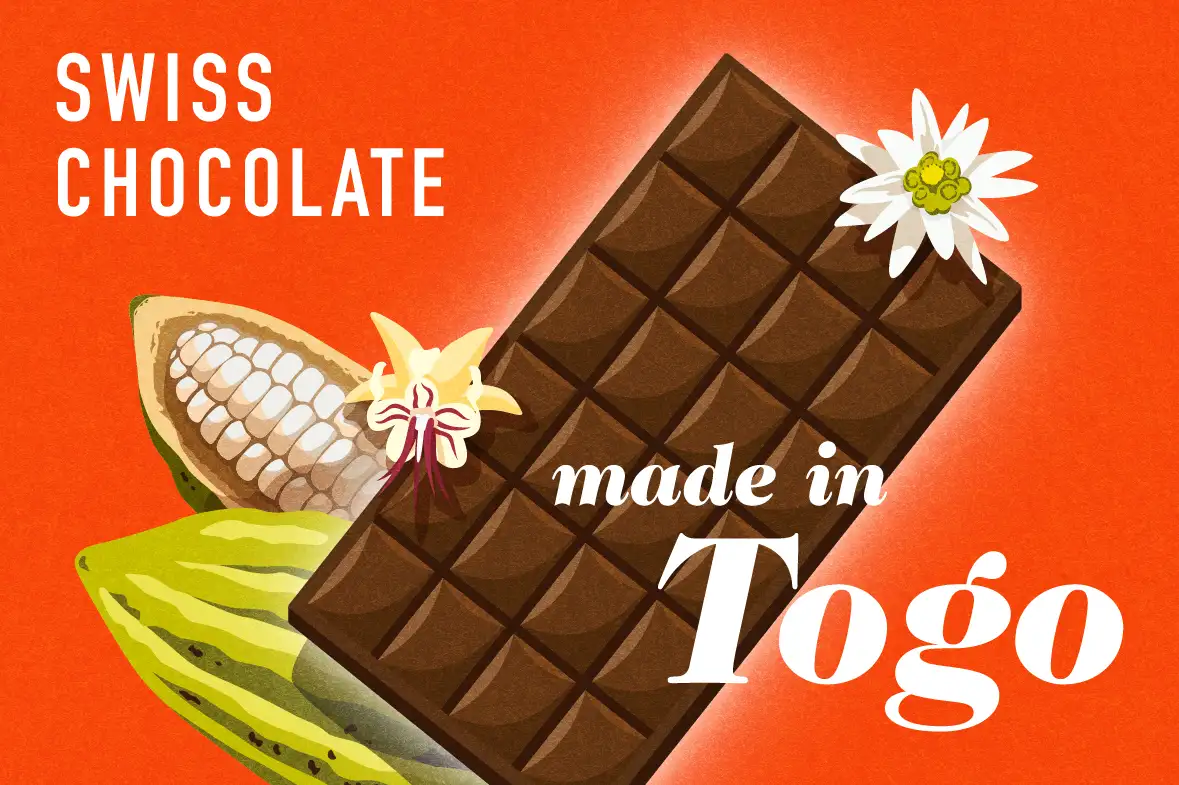
Until now, we have exported the cocoa from Togo unprocessed. Now we want to go one step further and process it into chocolate directly on site. This will allow more added value to remain in the country. Join our crowdfunding campaign and pre-order chocolate bars from the new production in Togo now. 

Graphic with slogan 'Swiss chocolate – made in Togo', gebana.com

The problems of the cocoa trade are also a reality for producers in Togo. Read below to find out what we are already doing to improve their situation and where there is still room for improvement. We rate our efforts on a scale from ❌❌❌ to ✅✅✅. 

We give family farmers a share of our revenue ✅

Our most important tool for improving the income of family farmers is the gebana model. According to this model, family farmers receive 10 per cent of the revenue from the sale of our chocolate in our online shop. This money is paid in addition to the organic and fair purchase price they receive for the cocoa. We distribute this 10 per cent directly to all families each year as an unconditional bonus.


However, we currently only process a fraction of the cocoa we buy from the family farmers into chocolate for our online shop. We sell most of it directly to wholesalers. With our own chocolate production on site, we will also be able to significantly increase the amount of chocolate produced. Our long-term goal is to produce up to 280 tonnes of chocolate directly in Togo each year.


The premiums we pay to each family according to our gebana model are still too low. We're giving ourselves one ✅.

We ask our wholesale customers to pay more ❌❌ .

For us to be able to offer family farmers a better price, our wholesale customers also have to pay more. We negotiated with them in 2022 and asked them to pay incrementally higher prices for our cocoa.


Cocoa is traded on the stock exchange. The world market price is subject to constant fluctuations. Due to poor harvests in West Africa, the price of a tonne of cocoa rose to unprecedented heights in 2024 and 2025. This makes it difficult to convince other major customers to pay even more for our cocoa. But we are staying on track.


Four of them are currently paying higher prices. But that's not enough. We need to pay cocoa producers a better price in order to make chocolate fairer. We'll keep at it and give ourselves two ❌❌

Organic farming for greater sustainability ✅✅✅

All the family farmers who supply us with cocoa are either certified organic or are in the process of converting to organic farming. We support family farmers and cooperatives in this transition. We also train organic producers and show them how to increase their yields using pruning techniques and compost. In 2025, 2894 producers took part in 249 of these training courses.


As a further measure, in 2025 we distributed a total of 264,120 cocoa seedlings and diversification plants to rejuvenate and diversify the plantations of family farmers. This will enable them to increase their yields and make their fields more resistant to the effects of climate change. We also supported cocoa cooperatives in setting up 25 tree nurseries and self-managed agricultural services. To this end, we equipped the cooperatives with materials for pruning the plants and spraying organic pesticides.


In Togo, we employ 11 agricultural engineers, or field agents, who work closely together with cocoa producers. They regularly visit the plots, help family farmers with any questions they have about farming and keep in touch with them.


By embracing organic farming practices and implementing more efficient working methods, family farmers are improving their yields while also helping preserve the ecosystem. We're giving ourselves three ✅✅✅.

Agroforestry instead of deforestation ✅✅

We check whether the family farmers we work with are clearing forested areas. Our digital database includes information about all the plots, which are electronically mapped using GPS. Every cocoa bean purchase is registered in this database. This gives us complete traceability.


In 2023, we started to compare the cocoa plots with data from Global Forest Watch. This information allows us to identify plots affected by deforestation and reject cocoa from these producers. The initial results show that the risk of deforestation in our cocoa supply chain is low.


Even more importantly in terms of preserving forests and biodiversity, we have been helping family farmers convert their fields to dynamic agroforestry since 2021. This involves combining different plants in a way that increases biodiversity, while the plants enrich the soil with nutrients and provide shade for one another. The family farmers can also harvest products like maize or plantains in addition to cocoa. This gives them an additional income while also reducing the amount of food they need to buy for their own consumption. .


Many families have been practising similar farming methods for years. We support them in bringing even more diversity to their plots, especially through native trees. Together with the family farmers, we have converted 159 plots with a total area of 40 hectares in Togo to dynamic agroforestry to date.


As we're just getting started with agroforestry and still have a lot of work to do in terms of getting people on board locally, we're only giving ourselves two ✅✅.

Combatting child labour ❌/✅

By maintaining direct contact with the families and conducting regular visits, we ensure that our supply chain is free from child slavery. Child slavery is the practice of selling children to cocoa producers as workers. Such practices have been flagged in certain countries, such as the Ivory Coast.


However, it's common for the farmers' children to work in the fields, as many families can't afford to hire seasonal harvest workers. In these cases, we can't control what kind of work the children do. According to the convention of the International Labour Organization, working with machetes constitutes hazardous child labour. Moreover, it is also difficult to monitor whether children are sometimes absent from school due to fieldwork. Below you can read about our plans to tackle this problem.


We have not identified any child slavery in our supply chains, hence the ✅. However, our measures against child labour are not yet sufficient, which is why we give ourselves an ❌

Building trust and supervising through close contact ✅✅

Our most important tool in maintaining transparency throughout the supply chain is contact with the cooperatives and family farmers. Our Field Agents pay personal visits to the family farmers on a regular basis. Information on all the families goes into our digital database, where we register all producers and their plots using GPS and satellite images.


We use personalised mobile payment systems to distribute revenue shares to ensure that the money reaches the farmers. This is an effective way to combat widespread corruption.


It's important to remain in close contact with family farmers in order to eliminate child slavery and environmentally harmful farming practices.


Unser Ansatz hat sich bewährt. Our approach has proven effective. That's why we're giving ourselves two ✅✅.

Our plan for more justice in cocoa trade

To sum it up: We're already doing a lot, but it's not enough. Here's what we're planning to do to make our cocoa and, by extension, our chocolate fairer and more sustainable in future: 

  • More money for farmers
    As part of our gebana model, we paid out € 121'489 in premiums to 1385 family farmers in Togo in March and April of 2025. Our long-term goal is to pay the family farmers in Togo a price for their cocoa that is sufficient to make a living.

  • More agroforestry and organic farming
    In 2026, we will support 50 more producers in converting their plots to dynamic agroforestry. We also want to accept an additional 627 family farmers into cooperatives this year and support them in organic farming. 

  • Awareness campaign against child labour
    We are conducting awareness campaigns to educate producers about the importance of their children attending school regularly. Together with the local NGO Centre d'Action pour le Développement Rural, we held four pilot workshops with family farmers in 2024. We also conducted surveys to better understand whether and why the producers' children work in the fields and what kind of work they do. Our plan for 2026 is to discuss the results in depth with the NGO in group discussions and to take measures to ensure that the children attend school as regularly as possible. 

  • Better access to organic pesticides
    We have launched a project to produce neem oil, an organic pesticide, locally and supply it to cocoa producers in future. The company we have established for this project will also produce compost and biochar and will help family farmers in pruning the cocoa trees. With this support, the producers should be able to increase their cocoa yields in the coming years.

  • Chocolate – 100 % made in Togo
    As part of a crowdfunding project, we tried our hand at making our own chocolate and at the end of 2023, we produced 2'000 bars of chocolate made entirely in Togo. We sourced all the cocoa beans for this project from two of the local cooperatives. Using these same beans, the gebana Togo team also produced the cocoa butter for the chocolate, which is usually obtained from industrial sources.

    We now offer the chocolate from our own production in small batches in our shop. At the end of 2025, we also launched a crowdfunding campaign to set up large-scale chocolate production locally. 

Our chocolate may not be perfect, but we work every day to make it better.

Most of the problems surrounding chocolate stem from poverty, which is why it's not enough to just treat the symptoms, such as deforestation or child labour. To make a real difference, family farmers need to earn more. And to achieve this, the key players in the chocolate industry also need to be part of the solution. 

Until then, we'll continue to use our Angry Gorilla to increase awareness of grievances in the chocolate trade. 

© gebana 2026. All rights reserved.
All prices in the online shop incl. VAT plus shipping costs and, if applicable, cash on delivery charges, unless otherwise stated.
Customer Service: Monday - Friday 8-12 / 13-17
+41 43 366 65 00
[email protected]
Service & Contact
  • Delivery Dates
  • FAQ
  • Shipping & Payment
  • Discounts
  • Contact
  • Media
Shop
  • Fruits & Vegetables
  • Dried Fruit
  • Nuts & Kernels
  • Pantry
  • Promotions & Discounts
Changing the Rules
  • We Share
  • Buy Seasonally
  • Buy in Bulk
  • Annual Report
Co-operation
  • Vacancies / Tenders
  • Commodities
  • Shops & Restaurants
Legal notice
  • Data privacy
  • Right of Withdrawal
  • Imprint
  • Terms & Conditions
  • Certificates
Newsletter
instagram - gebana facebook - gebana youtube - gebana linkedin - gebana pinterest - gebana
Trust Ecommerce Europe - gebana
Is your delivery address within the EU?
Newsletter
gebana AG Ausstellungsstrasse 21, 8005 Zürich, Schweiz