
 Login
Login

How is chocolate made?
We are setting up our own chocolate production in Togo. These steps are necessary to produce a melt-in-the-mouth chocolate bar from cocoa beans.
gebana Togo already produces small quantities of chocolate at its office in Lomé. The processes will remain the same in our new production facility, but with larger and more professional machines.
In the video, Fabrice Tchamida Boukouli explains how our small-scale production at gebana Togo's office in Lomé works.
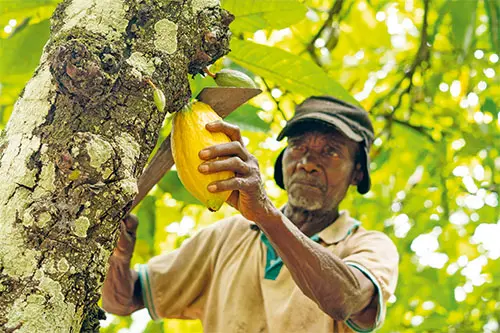
1. Cultivation, harvesting
Cocoa pods grow on trees and take 5 to 6 months to ripen. Family farmers from the Kpalimé and Badou regions grow the cocoa for our chocolate.
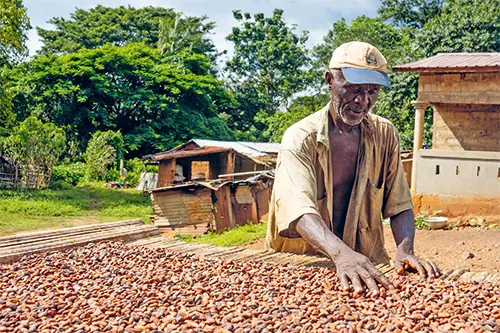
2. Opening, fermenting, drying
The family farmers open the pods and leave their pulp to ferment in banana leaves for 5 to 7 days. They then lay the beans out in the sun to dry for another 7 days.
.webp?width=3000)
.webp?width=3000)
3. Roasting, shelling, grinding
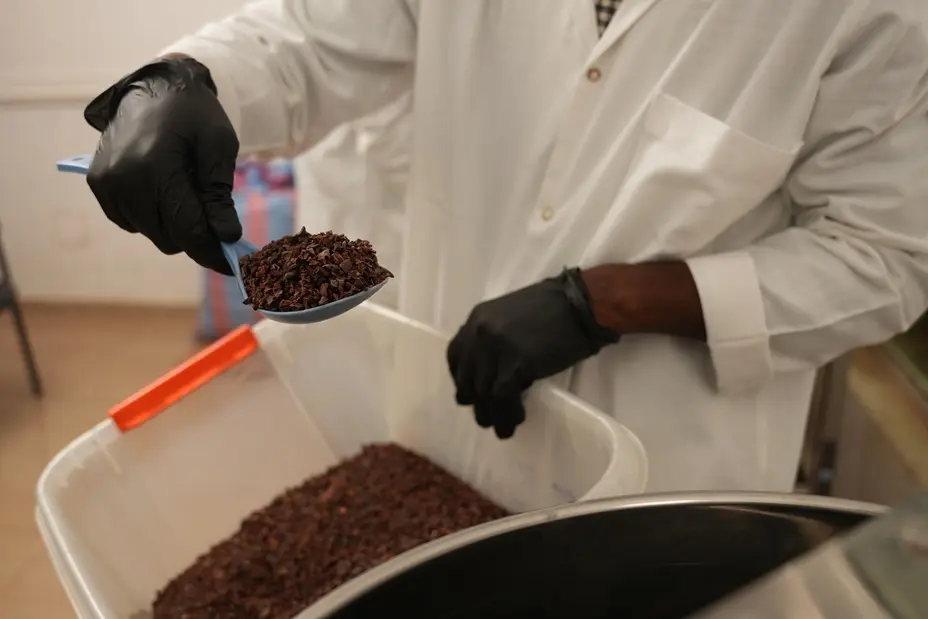
At our future production facility in Lomé, the dried cocoa beans will be roasted in a roasting oven, with the roasting profile having a decisive influence on the taste of the chocolate. After breaking, the roasted beans are separated from their shells in a so-called air separator. What remains are the cocoa nibs.
4. Mixing, conching, tempering
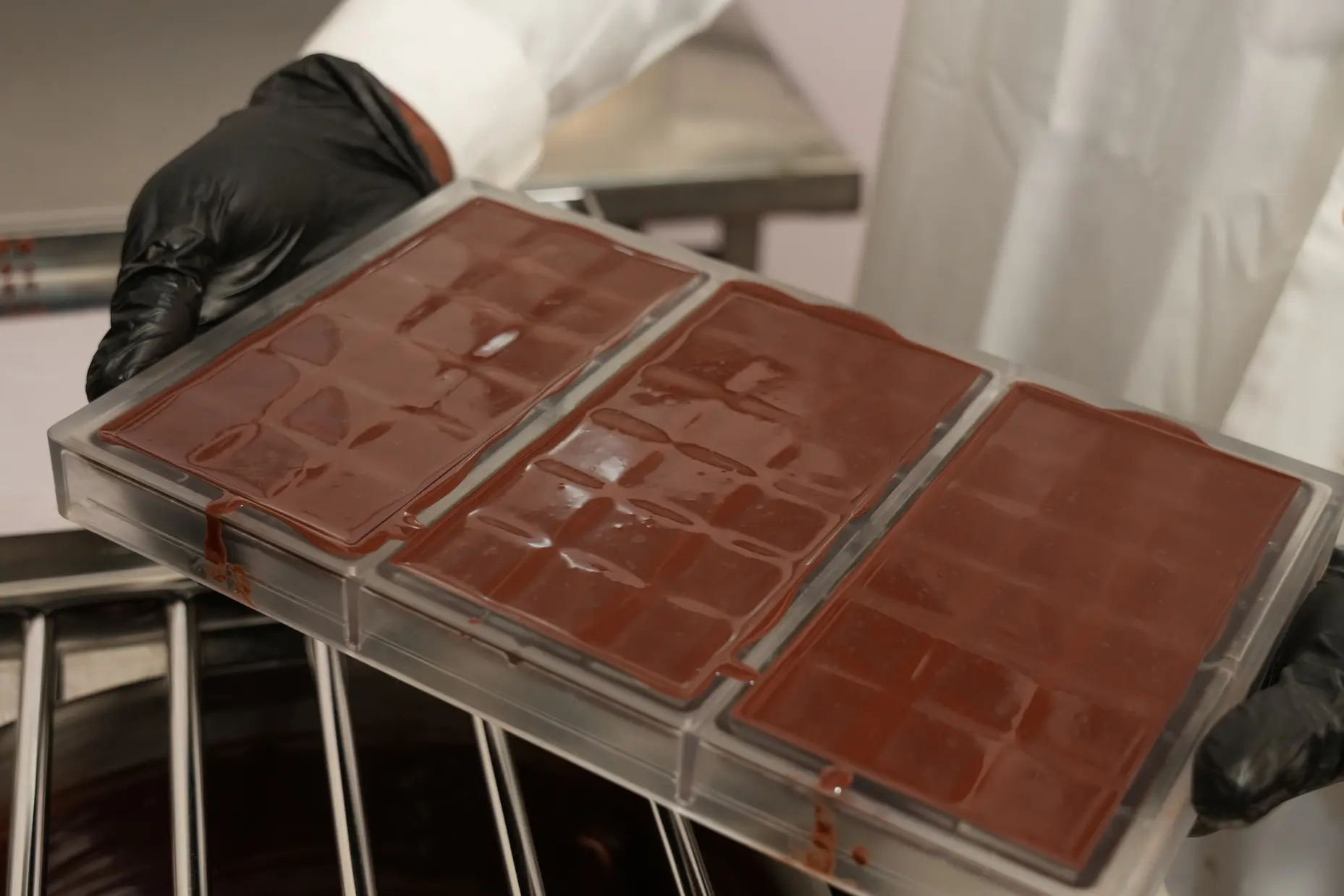
The cocoa nibs are rolled into a coarse-grained cocoa mass in a mill and then mixed with cocoa butter and sugar. This mixture is then stirred and conched for 12 to 24 hours to make it as smooth as possible and achieve the ideal flavour profile. In a tempering machine, the mass is heated and cooled again in a controlled manner so that the finished bars have a shiny surface that cracks nicely.

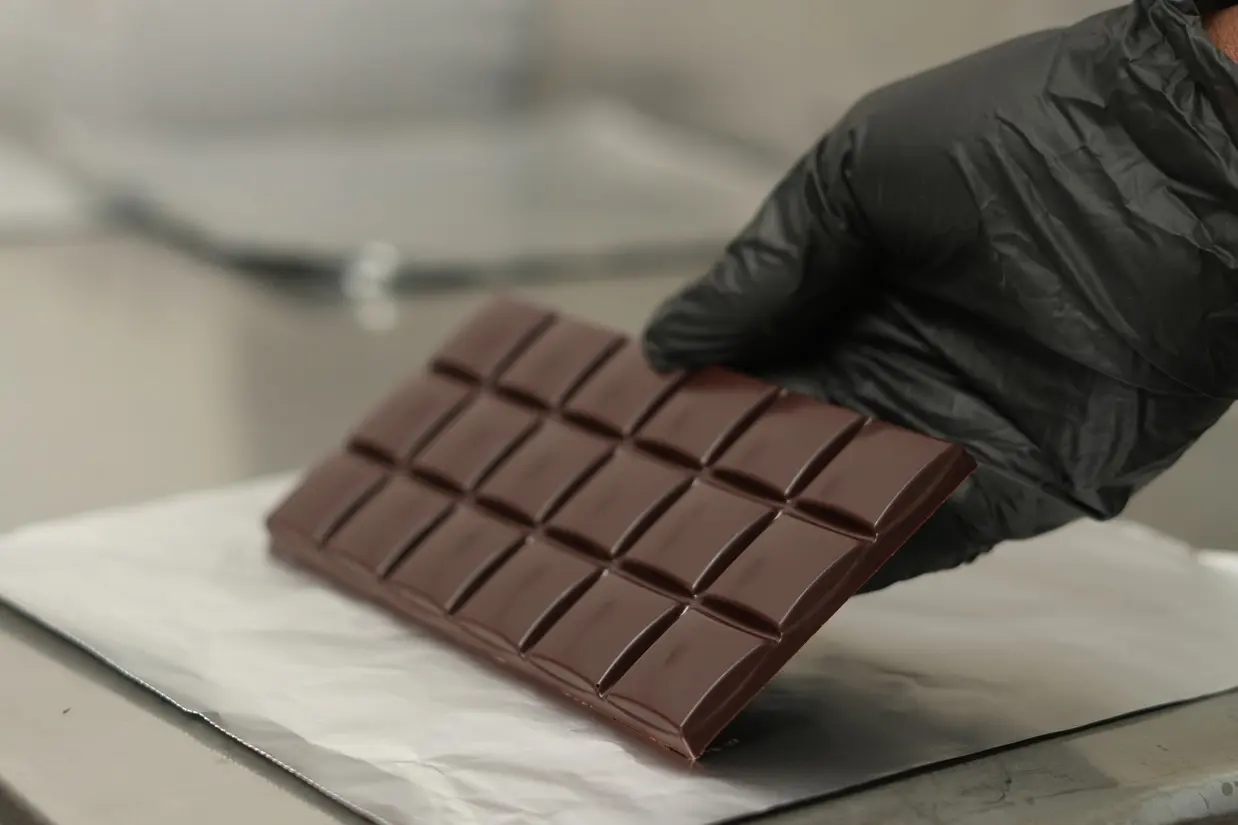
5. Pouring, packaging, exporting
Once the chocolate has been tempered, it can be poured into moulds. In our new production facility, this is expected to be a semi-automated process. We will produce both bars and chocolate drops. Once packaged, the chocolate, which is produced entirely in Togo, is ready for export to Europe!