
 Login
Login

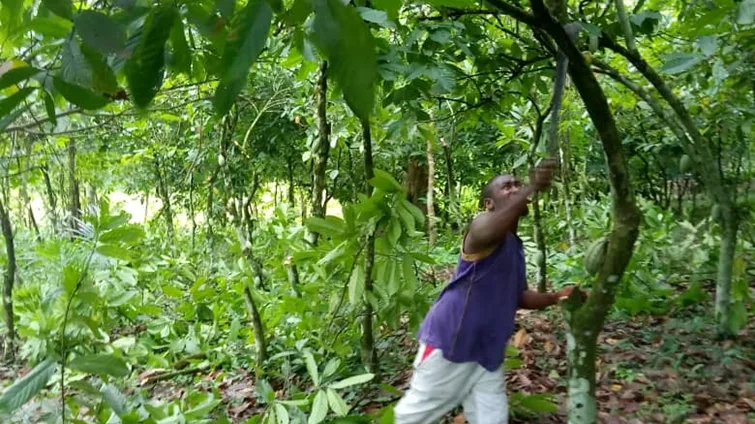
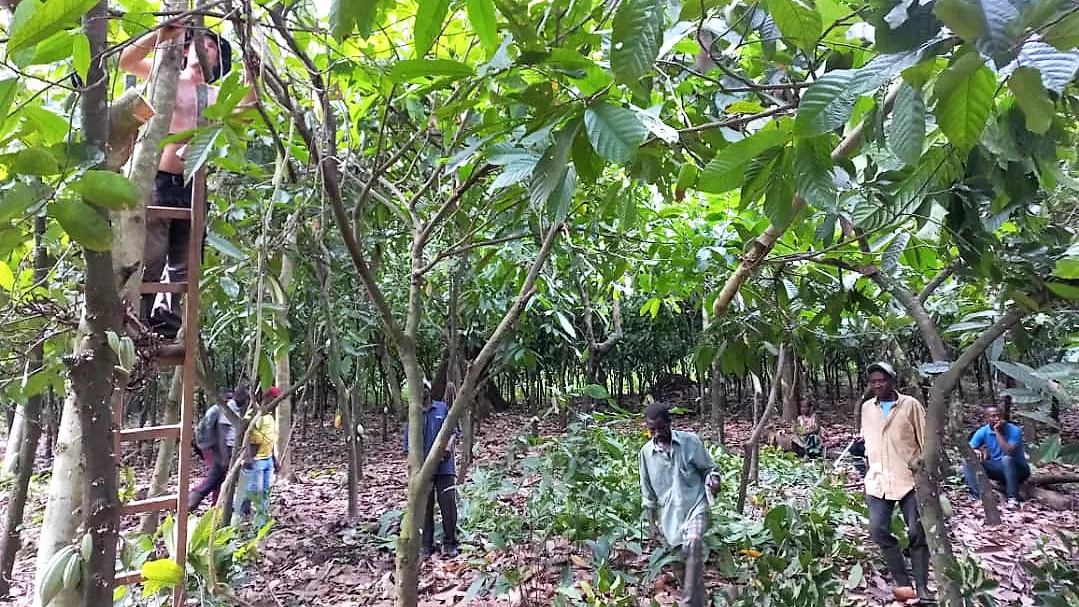
Agroforestry is defined as agriculture with trees. It sounds simple, but not very sophisticated. Yet there is much more to agroforestry than this definition suggests.
The underlying idea behind agroforestry is based on an age-old principle: to combine different plant species in such a way that they have a positive influence on each other. An example of this approach dating back hundreds of years is the Three Sisters cultivation method, which was widely practised among the Iroquois on the American continent.
When planted according to this method, pumpkin, corn and beans benefit directly from each other: The corn serves as a trellis for the beans to climb on, the beans fix nitrogen in the soil, and the pumpkin spreads out its broad leaves and prevents weeds from growing while also creating a humid microclimate. Win-win-win!
Smart crops can improve the soil and the harvest
But the aim of agroforestry is not only to create these kinds of direct interactions between plants – it is also to bring about a lasting positive impact on the environment as well as people. This lasting impact is achieved when trees are added to the mix – hence the name.
"In agroforestry, we talk about 'smart crops,'" says Ousseni Porgo, Head of Agronomy and Purchasing at gebana Burkina Faso: "Together they stabilise the soil and make it more fertile."
But that's not all smart crops can do: If the producers combine the right plants, they can harvest all year round without any downtime – at least in countries like Burkina Faso or Togo. Better harvests mean more income for the families, which is ultimately one of our most important goals.
Sophisticated methods are required to stop desertification
A traditional form of this cultivation method has been practised for a very long time in Togo and Burkina Faso, as Porgo explains: "Families plant corn or cassava between their mango and cashew trees to feed themselves." But it's not enough to stop desertification.
Desertification occurs when fertile land is transformed into a steppe. It can be caused by groundwater levels dropping or, more critically, the cutting down of trees or hedges. However, the situation in Togo and Burkina Faso has much more to do with climate change. It creates problems for family farmers and for us, for which no solutions have been found so far.
Agroforestry provides some of the methods to prevent or at least mitigate the problems caused by climate change. According to these methods, crops such as corn, chilies or aubergines are combined with tree species such as orange and lemon, avocado and cocoa. In addition, depending on the region, timber or precious woods native to the area can also be planted. Together they form a system of several cleverly arranged plants with different life cycles. In this way, the soil is supplied with organic material, old and less productive trees are cut down and replaced with others types that provide shade or retain moisture in the soil. Organic matter turns to humus and protects the soil from erosion, thereby improving soil quality.
Knowledge transfer is a key factor for success
Specialist knowledge is required in order to design these kinds of systems. This is why, in 2020, gebana Togo launched test fields and introduced training courses in dynamic agroforesty for family farmers. We are exploring this approach right now in Togo and Burkina Faso.
For example, we are testing and showing producers in Togo how cocoa trees can be combined with other trees and crops on their plots. We are also demonstrating how to use organic fertiliser and how to get rid of pests using neem oil.
The biggest challenge in all of this is to win over family farmers, as Eric Ankou from gebana Togo explains: "It is difficult to build a dynamic agroforestry system. In addition to the cost, there is a lot of labour involved in setting it up and also maintaining it."
Many participants are baffled or even sceptical when starting their training on the test fields. They often don't understand why they need to prune their trees more aggressively or, in some cases, cut down their old trees. But there is a reason behind this. In order to increase yields, agroforestry requires plants at every "level" to cover the whole range and recreate the natural symbiosis of a forest. According to Ankou, most people recognise the benefits when they see medium and long-term changes on the test plots.
Every region places different demands on agroforestry
We have been working on a similar project in Burkina Faso since September 2021. We want to show family farmers in this region, too, the positive impact that agroforestry can have. Our agricultural technicians conduct trials on pilot plots with the family farmers to see which plants combine well with each other. Involving the family farmers at an early stage is also one of the keys to success. "Unfortunately, we cannot train every single producer. This is why we want to pass on the knowledge from the agricultural technicians to the farmers, who will then pass the torch to other farmers," says Porgo.
But what we have learned in Togo cannot really be reapplied because the regional specifics of the place where dynamic agroforestry is to be established must always be taken into account. A cocoa system like the one in Togo requires different methods than one for soybeans or mangoes in other regions of the world.
The agroforestry approach has the potential to change the way things are done in Europe as well. The idea has also caught on in Greece and a similar project is being planned. This will include a test field where family farmers can see the possibilities for themselves and discover how they can transform their fields.
In any case – whether in Togo, Burkina Faso or Greece – agroforestry is a time-consuming process. We, along with the family farmers, need to develop a good understanding in order to put the findings from the test fields into practice. By conducting ongoing training cycles, having more experts on the ground and continuously monitoring the converted farms, we can pave the way to a more widespread use of dynamic agroforestry – step by step.
Ongoing projects
Organic Cocoa Farming in Togo: Supported by the State Secretariat for Economic Affairs (SECO) and the Swiss Platform for Sustainable Cocoa, active since 2020.
Sustainable and Organic Cocoa Farming in Togo: We are running this project, launched in 2020, together with our partner Altromercato.
Sustainable Mangos and Cashews – Made in Africa: Project initiated by Coop and HALBA, launched in September 2021.
In cooperation with:
Ecotop Suisse: Our partners for field schools and on-site training in Burkina Faso and Togo (accessed on 16.12.2021)
Sources
About Agroforestry, Food and Agriculture Organization of the United Nations, 2015 (accessed on 11.11.2021)
gebana Switzerland, Ecotop, 2018 (accessed on 21.12.2021)
Pleasant developments in Togo, gebana blog, 2019, (accessed on 21.12.2021)