
 Login

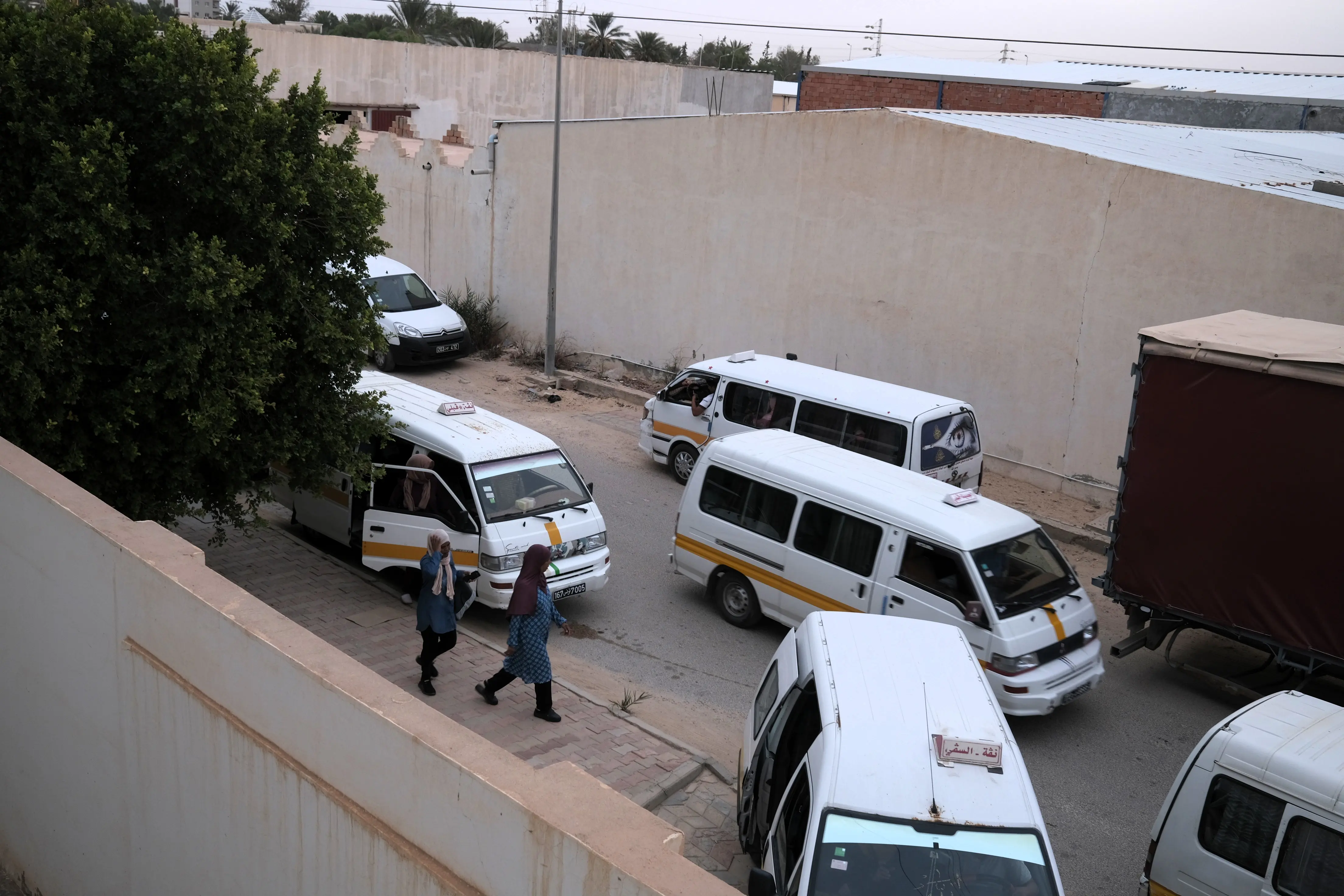
It is just before 8 o’clock. An inconspicuous minibus makes its way through a neighborhoud on the outskirts of Kebili in Tunisia. It is on its way to pick up a group of women. Zohra Lassoued and Wassila Hajali are two of them. Every morning they wait together with neighbours and cousins for this bus that takes them to their workplace. "The journey takes 15 minutes. On the way we mostly chat," says Wassila Hajali as she gets on. "The bus has no air conditioning, so we just open the windows," adds Zohra Lassoued. The transport is free for the women.
They work at South Organic’s date processing plant. The company that owns the minibus has been our supplier of organic dates from Tunisia since 2003. Originally called gebana Maghreb, it was one of our subsidiaries. Since 2015 the operation has been independent and, in addition to us, supplies many other customers with dates from 207 family farmers from four oases on the edge of the Sahara in south-western Tunisia: Hazoua, Rgime Maatoug, Derjine and Barghoutia.
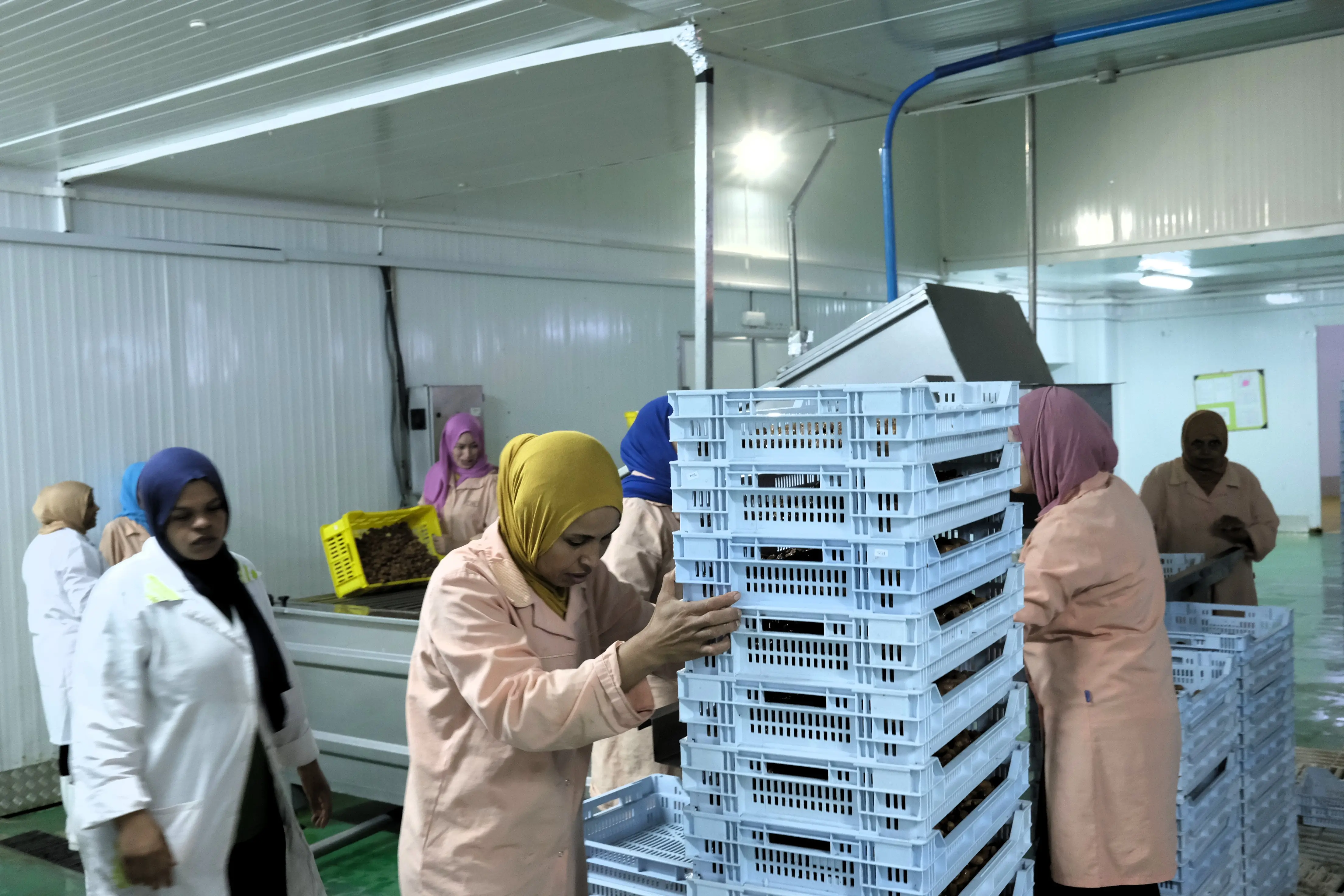
In 2025 South Organic employed an average of 320 people. Most of them are women like Zohra Lassoued and Wassila Hajali. They wash, sort and pack the dates. But women are not only well represented in processing: in 2025, 84 percent of management positions were held by women. Rachida Meshbah, for example, started in 2019 at the Hazoua sorting station. "At first I sorted dates, then I became a team leader and supervise my colleagues," says Meshbah, who is now 42.
Dates require a delicate touch
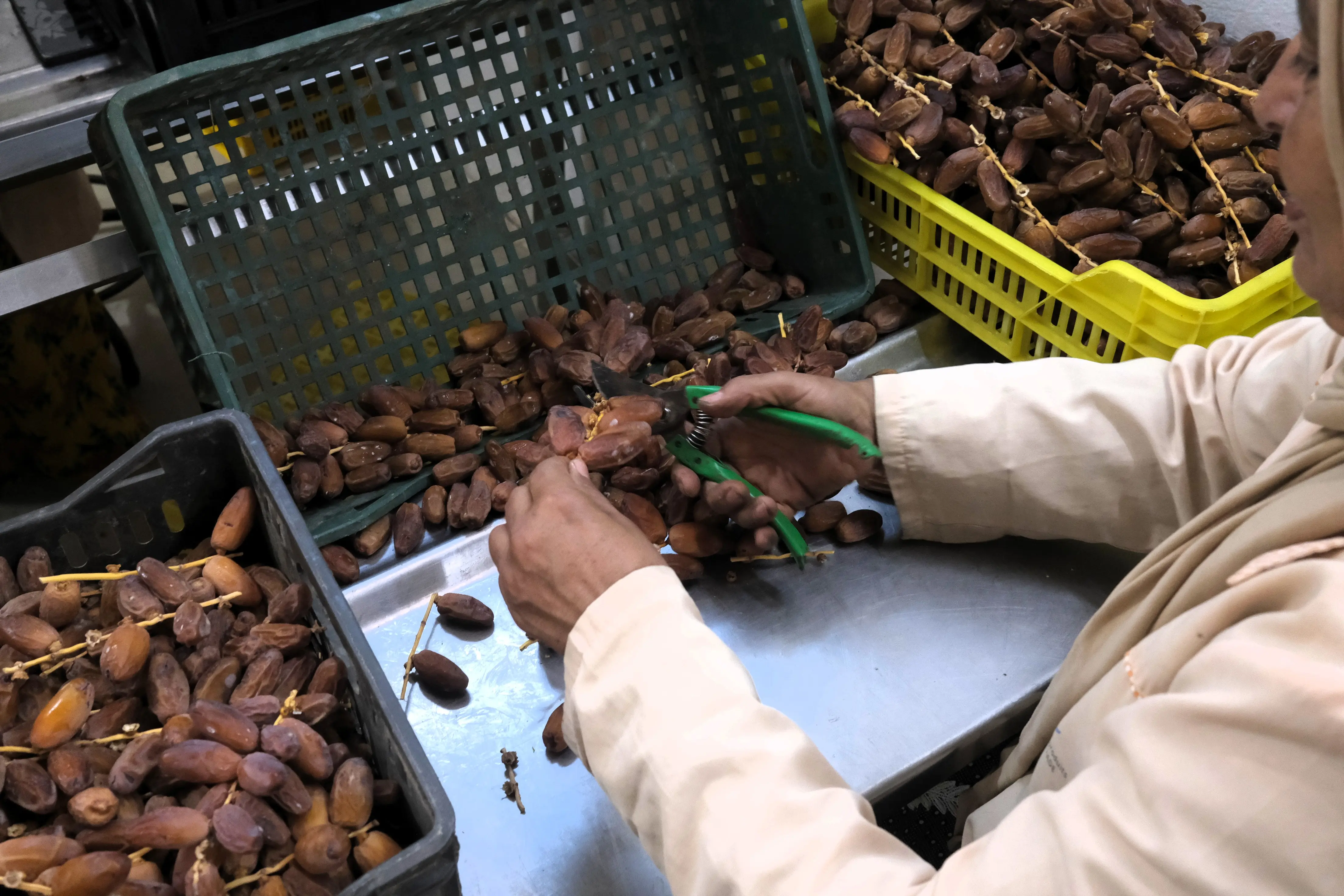
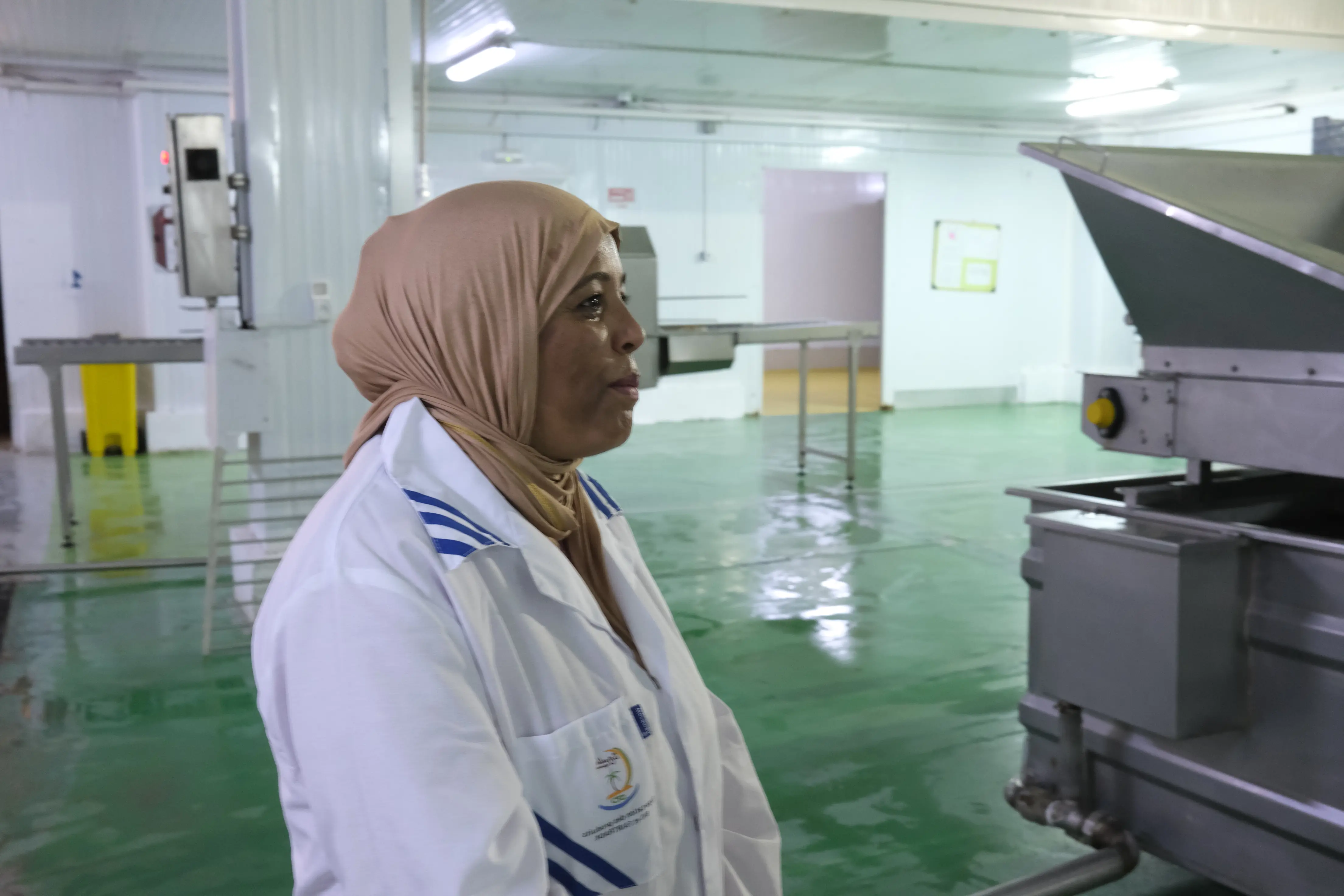
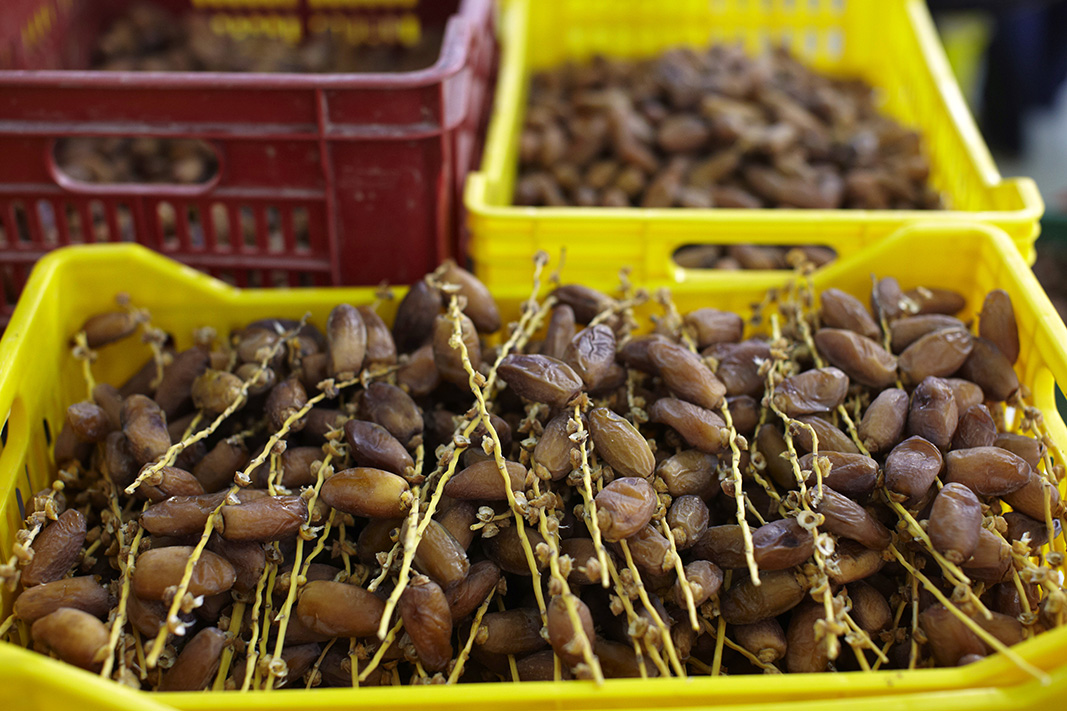
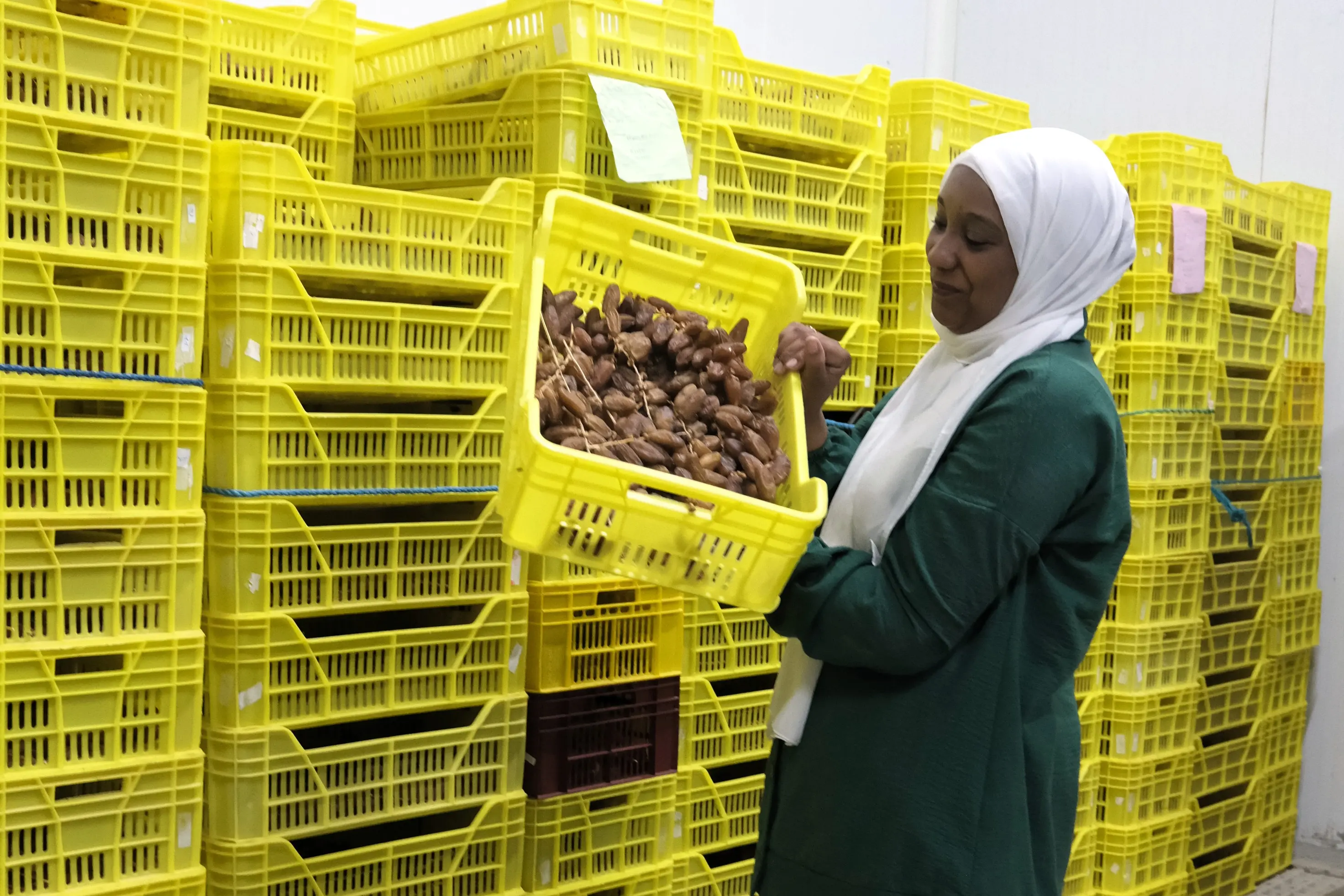
Growing and processing dates are both demanding work. Long before the harvest, special care is necessary so that the family farmers must take special care to secure a good yield. From around September many of them cover the clusters on the palms with bags to keep insects and other pests away. A few months later comes the delicate part: "The first step of the work is the most important," says Wassila Hajali. She heads goods receipt and the washing of the dates. "We wash the dates before we pass them on to the sorters. We have to be careful that the fruit does not split open or get crushed."
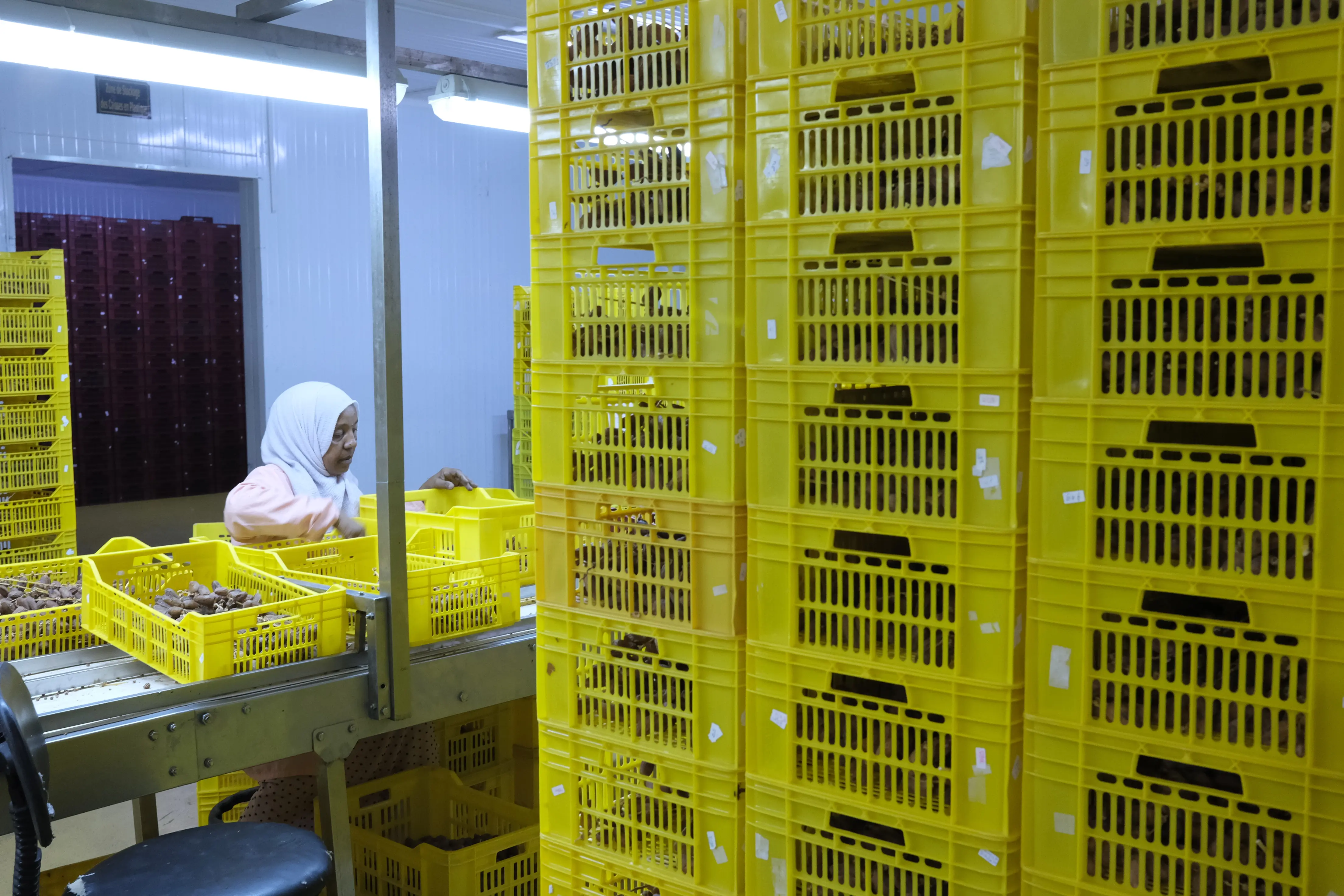
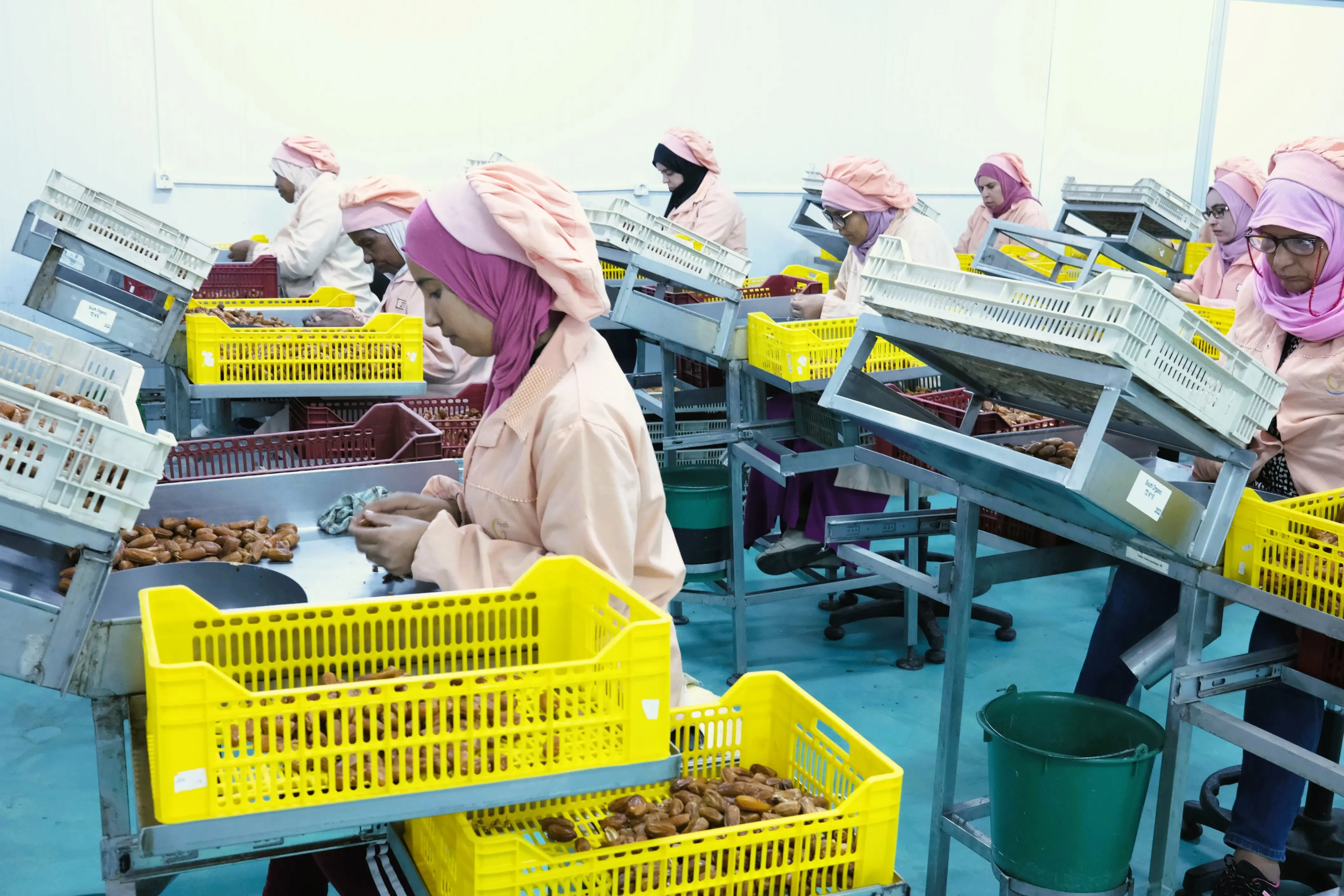
The workers at the sorting stations inspect each cluster by hand. The dates should be juicy and soft, remain whole and not stick to each other. They also trim the clusters to the same length. All of this requires a lot of finesse and experience. The majority of this work takes place in late autumn, directly after the harvest.
The average wage in processing in 2025 was 800 dinars per month. That is around 236 euros, about 1.5 times the statutory minimum wage in Tunisia. In addition to wages, South Organic offers free transport by minibus, paid holidays and maternity leave for permanent female employees.
Female students and women nearing retirement work hand in hand
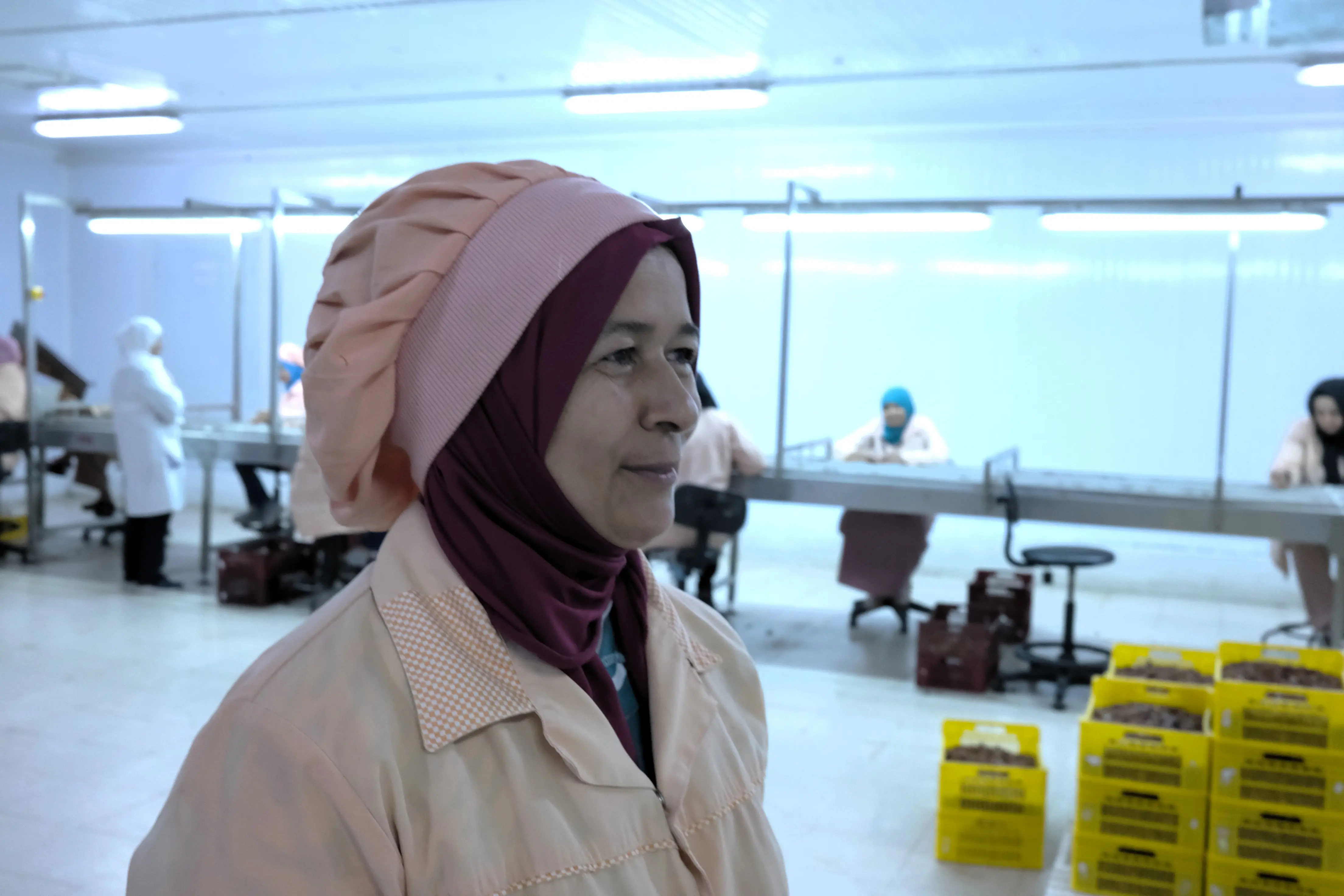
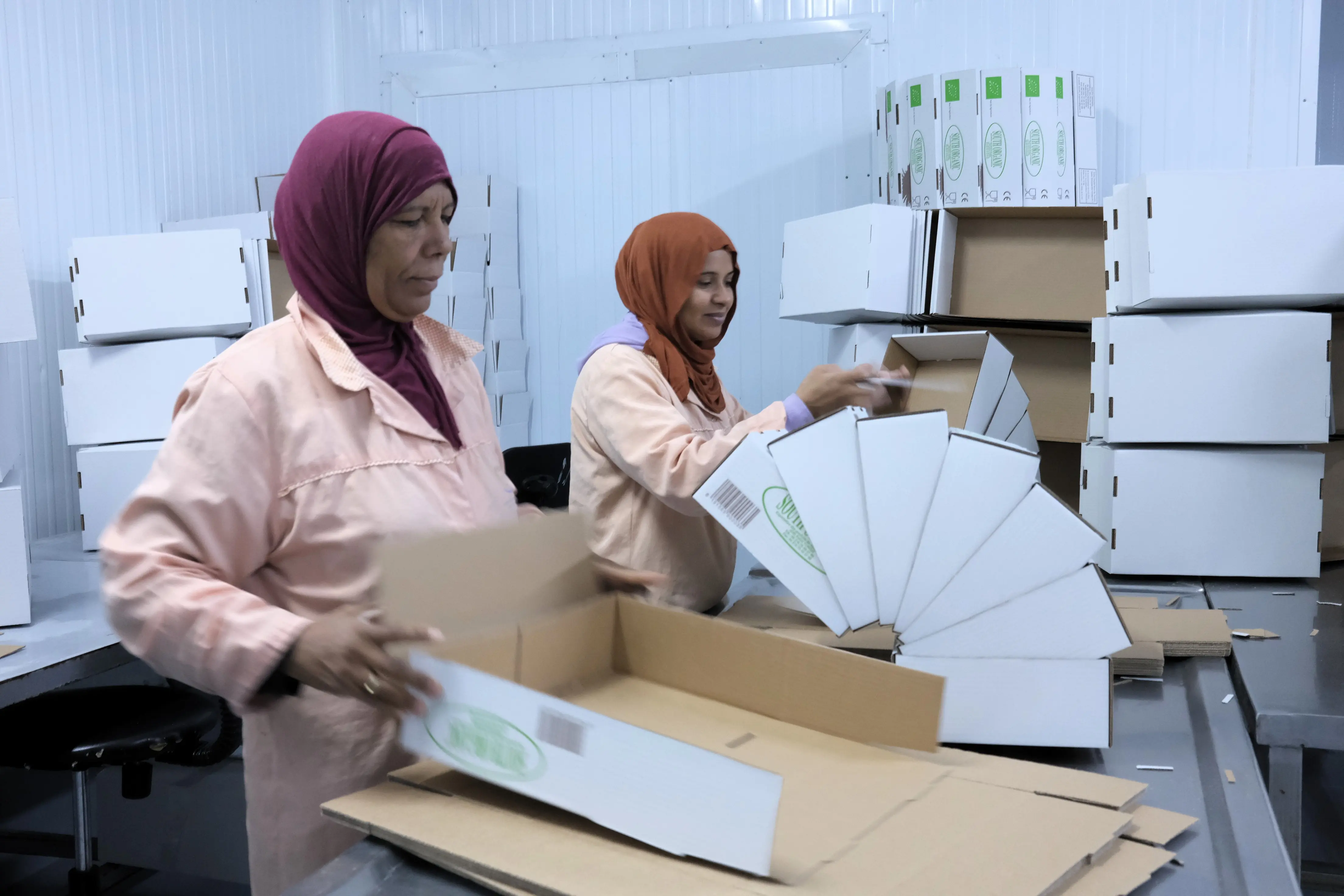
The women in processing have different stories. There are female students who finance their studies this way, and older women nearing retirement who would otherwise have little chance of finding work in this rural region. Many stay for years: Zohra Lassoued has been sorting dates since 2009, Wassila Hajali has worked at South Organic since 2010. Mabrukan Ghanem, who is around 53, used to sell sandwiches at the market. "That was good money, but exhausting. Sorting is perfect for my age: it is not physically demanding, and I meet all my colleagues."
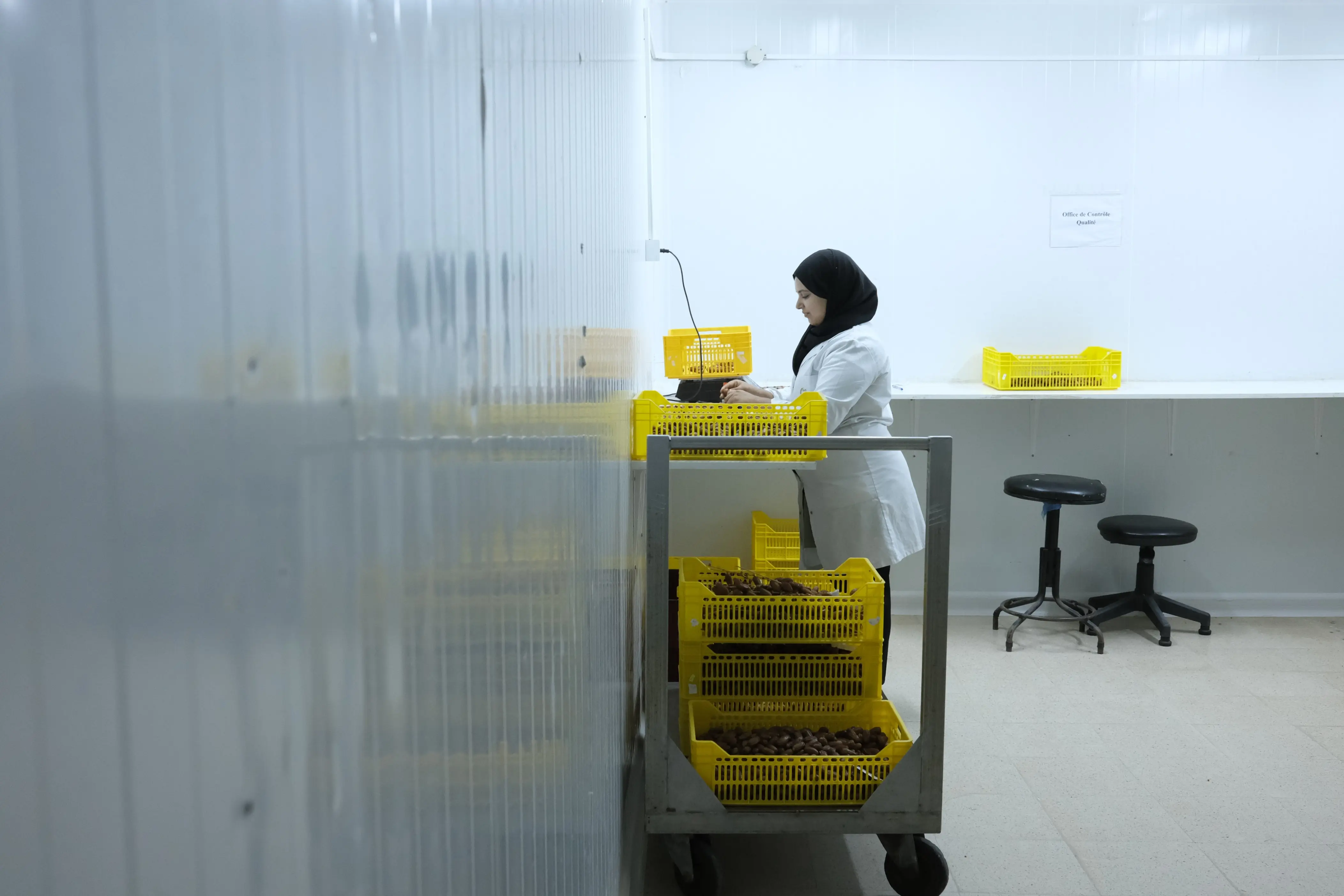
At the end of the line stands Mabrouka Maali. The 65-year-old packs the dates into the boxes that will arrive at your place in winter. In 2023, after a long break, she returned to work at the new sorting station in Kebili. In the team she has a clear role: "We, the older women, have experience. We set a good example for the younger ones, who respect us."
In November and December the sorting stations are extremely busy. The dates that reach you this winter will have passed through many hands.
Sources
Statutory minimum wage in Tunisia (SMIG, 48-hour week), valid 2025: Décret n° 2024-419, Journal Officiel de la République Tunisienne n° 85 of 9 July 2024. Online via ILO NATLEX: https://natlex.ilo.org/dyn/natlex2/r/natlex/fe/details?p3_isn=116906 (accessed on 2.11.2026)