
 Login
Login

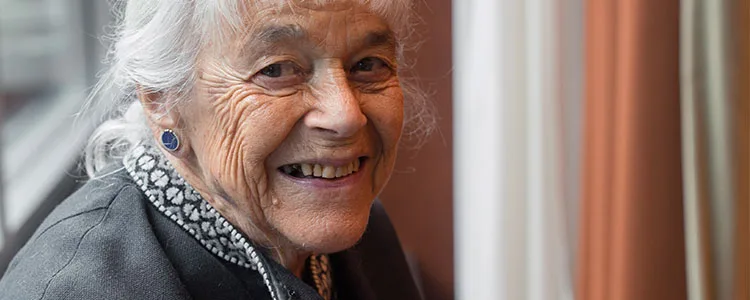
I remember when I first heard about you – in a liberation theology group almost 25 years ago. Back then you were already around 70 years old and so active that the then-managing directors of the gebana association had their hands full trying to channel your ideas. Your constant activity had nothing to do with an inability to let go. It wasn’t about gebana, a position or an idealistic commitment. One sensed something more existential, rather an "option for the poor" in the tradition of Latin American liberation theology.
I believe the FDP breaking with you in the early 1980s mattered far less to you than the way the major Swiss aid organizations standardized Fair Trade in the 1990s and transferred it into conventional trade. As in many other countries and at the urging of the big retailers, they decided to create a label that enabled conventional trade to sell fair products. At the same time they stepped back from direct involvement in trade matters and on the one hand moved closer to conventional trade, on the other hand became more distant from the topic and more ideological. The early initiatives seemed unprofessional to them and their decades of experience were hardly taken into account.
Despite your rhetorical skill, at the time you found it impossible to explain why the successful growth in sales under the Max Havelaar label left a sour taste for you. You didn’t make friends with your criticism and your clashes with management and the aid organizations that formed the board of trustees. You were praised for the past, but people thought you and other pioneers were outdated and simply a bit jealous. I admit that as a newly appointed gebana managing director back then I sometimes thought the same. Only years later did it dawn on me what you meant by "there is no fair product": the standardization of "fair" inevitably leads to a kind of modern indulgence trade. By being able to buy fair products, one relieves oneself of questions of justice. Trade and the distribution of value do not change. Nevertheless: you were never against Max Havelaar and you always maintained close relations with many of its employees. What bothered you was that with "fair products" the issue of just trade was filed away.
From our last meeting I remember how pleased you were about the new initiatives that are emerging at the moment. You were close to these new initiatives and some of their young pioneers. They are looking for the same thing you and your comrades sought over 40 years ago: more justice. Fair trade is a tool for them, a testing ground and not an end in itself. What they all share is the need to act and to challenge the existing trade systems. That was also true for you banana women. You didn’t want to work with donations or merely criticize, but to effect change in international trade. Fearlessly and with a sense of where the power sits, you tackled the issue. "Then we’ll just do it ourselves" may have been one of your guiding principles. The same sentence also inspires the youngest generation of activists in your tradition.
So Fair Trade is moving again. The new topics are market access, jobs, crowdorder and more generally jointly organized and shared supply chains, openness instead of protectionism, taking sides again for countries, farmers and migrants from the South. In these new movements fair trade also comes a bit closer to your dream of a round table where everyone from customers to farmers sits and negotiates the price. My impression was that you had recently become more reconciled to this, perhaps also because Max Havelaar has turned more toward questions of impact and the further development of the fair trade idea.
Between our first and our last meeting I came to know you as a pragmatic board member of the newly founded gebana AG, who always thought of the people amid crises, as a board member who later wanted to give up her post and become a warehouse worker – at that time you were almost 80. I remember how you stirred up an uprising because the warehouse was too cold, too small and badly organized from the office: "ground staff against office management" was the title of your manifesto. I also remember the many young, committed women you electrified at talks in secondary schools or at chance meetings, who then suddenly appeared to work with our young company. Later the 40th anniversary of the banana women, when three generations of banana women with handcarts, prams and walkers distributed bananas and a banana newspaper again in Frauenfeld. I also recall the meeting with the entire staff in Bergün, when you, with over 90 of the youngest gebana generation, told your story and your thoughts. Two hours flew by in no time and were then discussed for hours at the bar.
And what now without you? After a discussion with you I wrote down: Fair trade as it is today functions elitishly – benevolent rich people keep it alive. It therefore remains with its nicely touted and advertised "fair" products a niche next to conventional trade, partly because of the price, partly because it is one of many options to shop better. Thus it loses its transformative power and will soon come to an end: in the niche of world-improving consumption and, more importantly, because it can be bought at all. This applies especially to the labeling approach, but also to gebana. We must therefore be more fundamental! We must not remain a niche and we must not sell "fair products." But how? After all, we are a dwarf and we sell products...
For me the direction for our path lies in the sentences mentioned:
"There is no fair product," that means: transparency instead of selling a good conscience and constant improvement. We are a movement and not merely product sellers, our products are not an end in themselves but a means to an end, as is fair trade itself. Sustainable fairness is when independent companies arise in the producing countries that are not dependent on "Fair Trade."
"Our dream is that everyone from the farmer to the customer sits around a table and negotiates the price," that means: using developments in communication technology and logistics to bring farmers and customers closer together. Fair products can thus be better and sometimes even cheaper than conventional ones, but above all farmers and customers can jointly, in the long term and undisturbed by the often conflicting interests of intermediaries, decide on price, quality and sustainability and thus overcome constraints in which companies constantly find themselves.
"Then we’ll just do it ourselves," that means: let us make and democratize the entire trade chain ourselves. We must know the farmers and their families and connect them with consumers and we must find ways to share the power of trade. We must therefore continue to take big risks as a company.
You shaped me in many discussions about Fair Trade and gebana and by your example. In the never-ending crises you reminded us of the core of gebana and you always supported courageous decisions without fear. Your belief that things could turn out well was vital for survival. Besides your committed interest in gebana, your loving interest in people and also in me and my family touched me. I have only ever experienced that similarly in Latin America. Your interest was always first for the women – sometimes I had the impression that you saw and judged me and my work through the eyes of my wife. When I think about it, you have in a way led gebana to this day with your friendship to so many of us.
Dear Ursula, I thank you with all my heart for the friendship and solidarity with which you accompanied us and for the direction you showed us.
Now we’ll just do it ourselves.
Adrian for the gebana team
Ursula Brunner was a co-founder of the Banana Women movement in 1973, a co-founder of gebana AG and is considered a pioneer of fair trade. She passed away on March 23, 2017 at the age of 92.