
 Login
Login

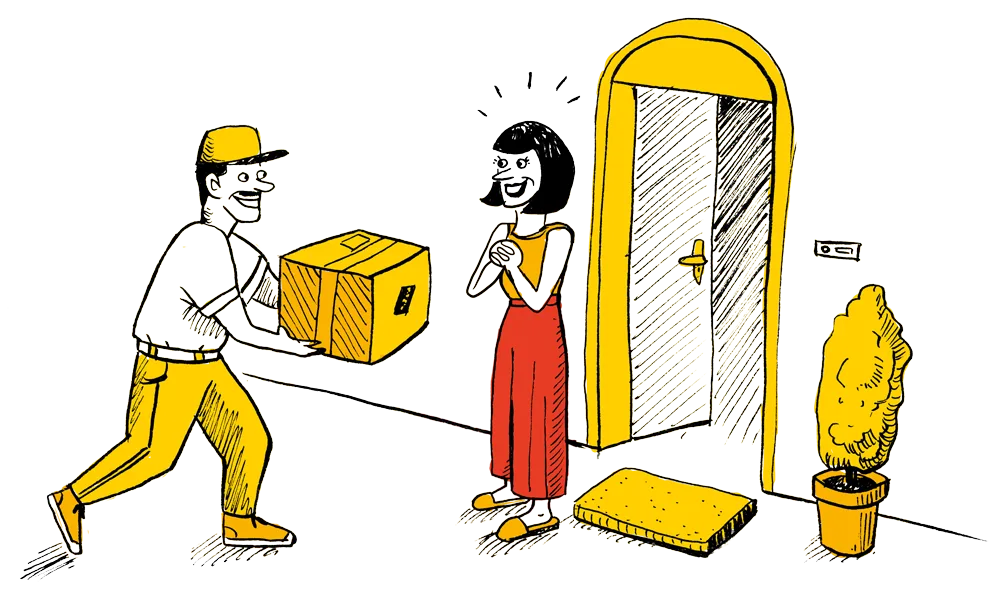
1973 is the birth year of the "banana women." A group of women began confronting people on the streets with the harsh working conditions on banana plantations — and showing how this is linked to the low prices for bananas in Switzerland. The group grew and became a movement. With actions such as selling bananas for an extra charge, which they invested in projects on the banana plantations, they caused a great deal of attention. Eventually they became actively involved in the banana trade. When the first Fair Trade certified bananas appeared on the market in 1997, the banana women — by then already known as the "gebana association" (short for the "Working Group for Fair Banana Trade") — seemed to have reached their goal.
But they were not satisfied with the development: Does trade actually become fairer by setting criteria and introducing a label? No! The board of the gebana association is convinced that there is still much to be done. This is the birth of gebana as you know it today.
1998
In August 1998 the company gebana is founded as a trading company. The aim is to build trading networks that are socially, ecologically and economically sustainable and thus make global trade fairer. The first product to be traded is organic soy from smallholder families in Paraná, Brazil.
1999
The first organic soy from Brazil, pre-financed by gebana, is brazenly delivered by the Dutch import partner to its own customers instead of to gebana. Barely started, the young company is already involved in a legal dispute.
2000
In addition to the sesame bar Barrita and the dried bananas, which date back to the gebana association, further gebana branded products are developed: chocolate-coated dried fruits with appealing names like «Salsa», «Mambo» and «Merengue». For this purpose, dried mangoes are imported directly from producers in Burkina Faso for the first time in 2001, as well as dried pineapple from Togo. But to secure one of the contested spots on supermarket shelves, investments are necessary that gebana cannot make. In 2002 the “branded products” project is therefore discontinued.
2001
After being run for three years as a mandate of the consulting firm BSD, gebana hires its own staff for the first time. Their first task: look for investors.
2002
Due to the precarious financial situation, a capital cut is carried out. Heated discussions erupt about the continuation of the company. But giving up is out of the question. In Brazil, Japanese investors take over our partner company – and want to get rid of us. To ensure cooperation with the farming families on site, the subsidiary gebana Brasil is therefore founded in the same year.
Although sales in the raw commodity trade are developing well, market demands and dependencies on large customers are high. At the same time, large sums of money are needed to pre-finance the harvests – this makes the business risky. That is why gebana is launching a new project: products from the origin will be sold directly to consumers via mail order. The gebana direct shipping is born! This business division will prove to be the key to stabilizing the risky gebana business model in the coming years.
In addition, gebana is starting cooperation with date farmers in Tunisia.
2004-2005
2004 proves to be a very difficult year for the raw materials trade. There is a threat of renewed over-indebtedness, which can be averted in 2005. For this reason, gebana focuses even more on direct shipping.
2006
In search of financing, gebana takes new paths: we accept loans from private individuals and issue participation certificates for the first time. Under the motto "Better many small financiers instead of a few large ones" gebana becomes less dependent on banks and a pioneer of the crowdfunding trend that would begin much later. To better structure and control the purchase of dried
mangos in Burkina Faso, the subsidiary gebana Afrique is founded on site.
2007-2008
gebana prospers and posts a profit for the first time in 2007. The 10-year
anniversary is celebrated with corresponding optimism, because after some initial difficulties the functional business model finally seems to have been found.
2009
gebanas raw materials trading feels the full force of the global financial and economic crisis, but fortunately direct shipping continues to grow largely unaffected.
2010
Now the economic crisis also hits direct shipping – it stagnates. But even greater trouble threatens: traces of the pesticide endosulfan are found throughout the entire organic soy harvest in Brazil. The cause is its use by conventional farmers in the surrounding area. Through air and rain it enters the environment and accumulates in the beans. The harvest is considered contaminated and is initially unsellable. Our subsidiary gebana Brasil is therefore on the brink and threatens to drag the entire company down. Together with the soy farmers in Brazil, gebana launches the protest action “Chega! – Enough!”. That has an effect: endosulfan, long banned in Europe, is also withdrawn from the market in Brazil! Two years later gebana Brasil can be rehabilitated – and eventually develops into the most successful subsidiary of gebana.

2011
The Jasmine Revolution in Tunisia and the uprising in Burkina Faso temporarily make our work more difficult. But the subsidiaries themselves develop well and we are investing in a cashew factory in Burkina Faso. This is intended to crack and peel more nuts on site. In the following years the cashew factory creates around 400 jobs.
2013-2016
gebana experiences true boom years: both direct shipping, the subsidiaries and the commodity trading all grow strongly. gebana gains more structure and the team in Switzerland is strengthened with experts. The gebana direct shipping sends fresh organic oranges from Greece for the first time. These are very well received and develop over the following years into one of the most important products. In 2016 gebana achieves the best result in its history.
In these years the gebana family also grows rapidly! In addition to dried pineapple, we now trade cocoa in Togo. When organic soy is added, we decide to found another subsidiary here. And already in 2016 our next baby sees the light of day: for the production of organic cashews a subsidiary is established in Benin as a joint venture with the Swiss retailer Coop.
2017
The boom comes to an abrupt end: gebana Afrique slips into a major crisis. Although financial difficulties had already become apparent the year before, massively rising cashew purchase prices, a poor mango harvest and at the same time necessary investments in processes and management lead to the collapse. Does it even make sense to continue, or would it be better to stop? The discussion makes us aware that building companies in difficult places is at the heart of gebana. That requires courage and perseverance – and we have proven both several times. So we launch the “Fresh Start in Burkina Faso” campaign, a five-year pre-sale of dried mangos and cashew nuts.
2018
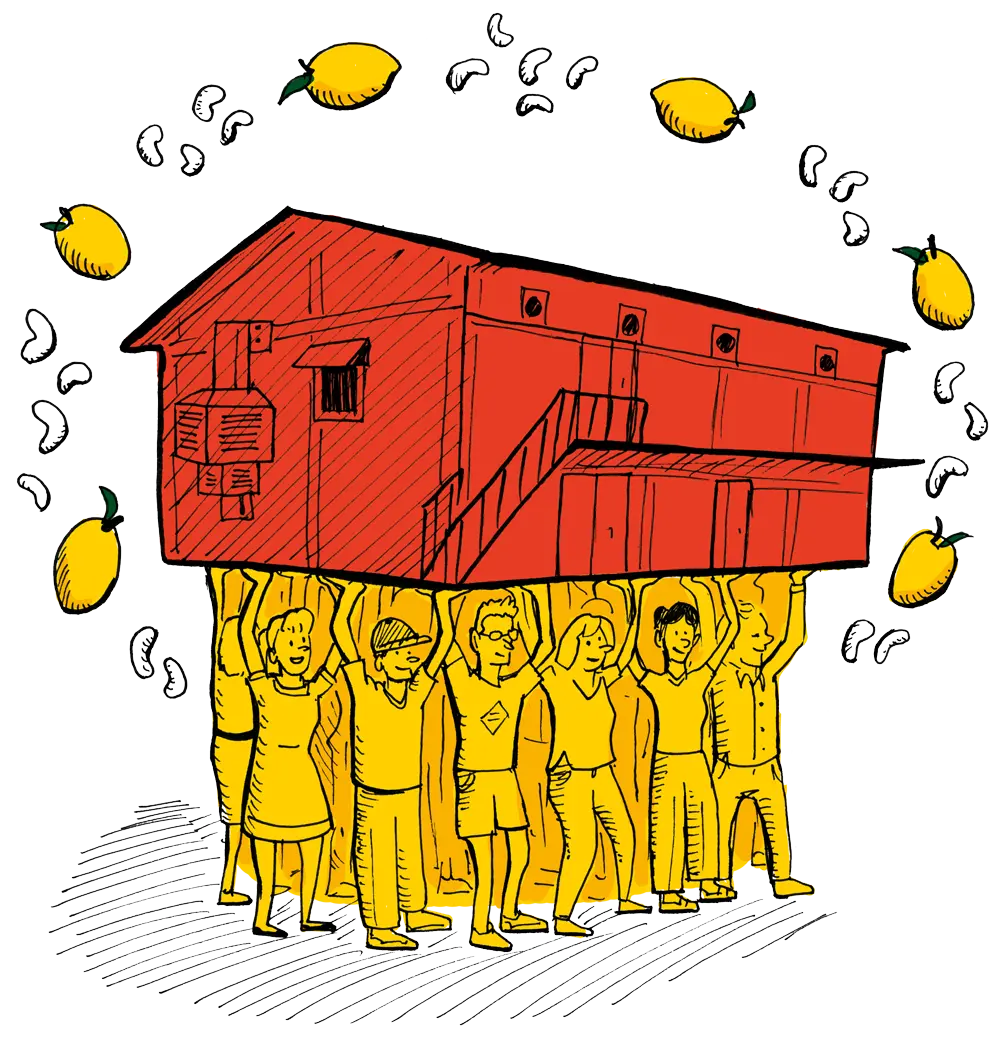
Thanks to the support of previous and new investors, trading partners and 2,841 private individuals, our subsidiary is restarting under the name gebana Burkina Faso. The crisis in Burkina Faso showed that our business model is still a challenging one. But gebana now has the size, structure and, above all, many like-minded supporters to withstand such difficulties.
And what does the future hold? We do not know, but we have plans: The supporting role of direct shipping is to be strengthened in the future by expanding into additional EU countries, the subsidiaries in the origin countries are to become progressively more independent, and the farmers are to benefit more. One thing is certain, however: it remains exciting! We're glad you're joining us on our continued journey!