 Login
Login

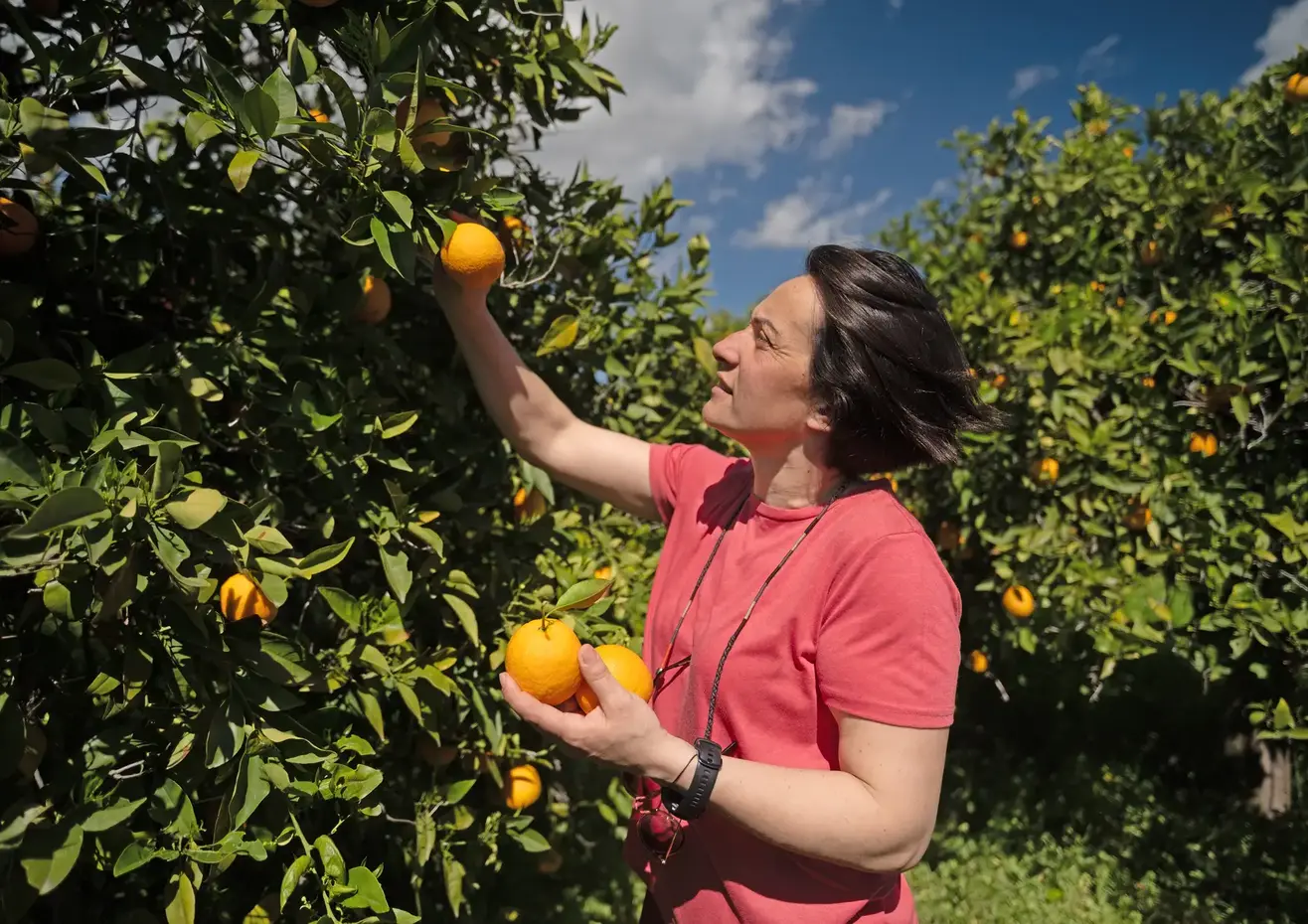
If you have ever tasted a gebana orange from Greece, you will know: the fruit from the Peloponnese tastes unlike any other. But why is that? What sets these oranges apart from others with less aroma?
In short: it comes down to the roots of the trees. Farming families in Greece have always relied on bitter orange rootstocks (also known as sour orange, Citrus aurantium), onto which they graft sweet oranges. The bitter orange is perfectly adapted to conditions in Greece. It is masterful at drawing nutrients from soils where other varieties would struggle to survive.
Slightly salty water makes for sweeter oranges
The bitter orange even tolerates slightly salty water. Under the stress triggered by the salt, a tree with bitter orange roots produces fruit that is even juicier and more intensely flavoured – although these oranges tend to be smaller than those from trees not exposed to this stress. But even without stress, bitter orange roots produce fruit with plenty of juice and a complex flavour profile marked by a harmonious balance of sweetness and acidity.
In the course of our research, we also discovered that oranges used to grow on bitter orange rootstocks right across southern Europe, and probably tasted similar to those from Greece.
A plant virus wiped out trees across southern Europe
In the early 20th century, the plant virus Citrus Tristeza spread like a pandemic and destroyed orange trees on a massive scale. Producers in Spain and Italy were hit particularly hard. Worldwide, the virus has destroyed more than 100 million citrus trees since.
The virus was so devastating because the bitter orange is particularly susceptible to Citrus Tristeza. Affected trees can die within a matter of days. In Spain and Italy, most producers therefore cleared their citrus groves entirely and switched to rootstocks of more modern hybrid varieties resistant to the virus.
Farming families in Greece opted for strict quarantine instead. They felled only infected trees and their immediate neighbours, digging out the roots completely. They then waited several years before replanting. This is how they managed to contain the virus.
The result: the bitter orange is still used as a rootstock in Greece today, giving our oranges their unforgettable aroma. We are glad that Greek farming families chose this path!