
 Login

Pineapples from Togo
Our organic pineapples from southern Togo are a treat, both fresh and dried.


Why are we offering dried pineapple at a reduced price?
We want to sell more dried pineapple so that gebana Togo can grow. Christophe Schmidt, CEO of gebana, says: "No commodity market is predictable enough for us to rely on it alone. After our withdrawal from soya, we are therefore deliberately broadening our base in Togo: with cocoa, which from 2030 we will process into chocolate in our own factory, and with dried pineapple, which we are actively expanding."
Where do gebana pineapples come from?
Our pineapples grow in the Maritime Region in the south of Togo. Our subsidiary gebana Togo works closely with the family farmers there. We source two varieties from them: the Sugar Loaf variety stands out with its intense sweetness and tender flesh. Even its core can be eaten. We sell it both fresh and dried. We use the sweet-and-sour Cayenne Lisse variety for our dried rings and pieces.
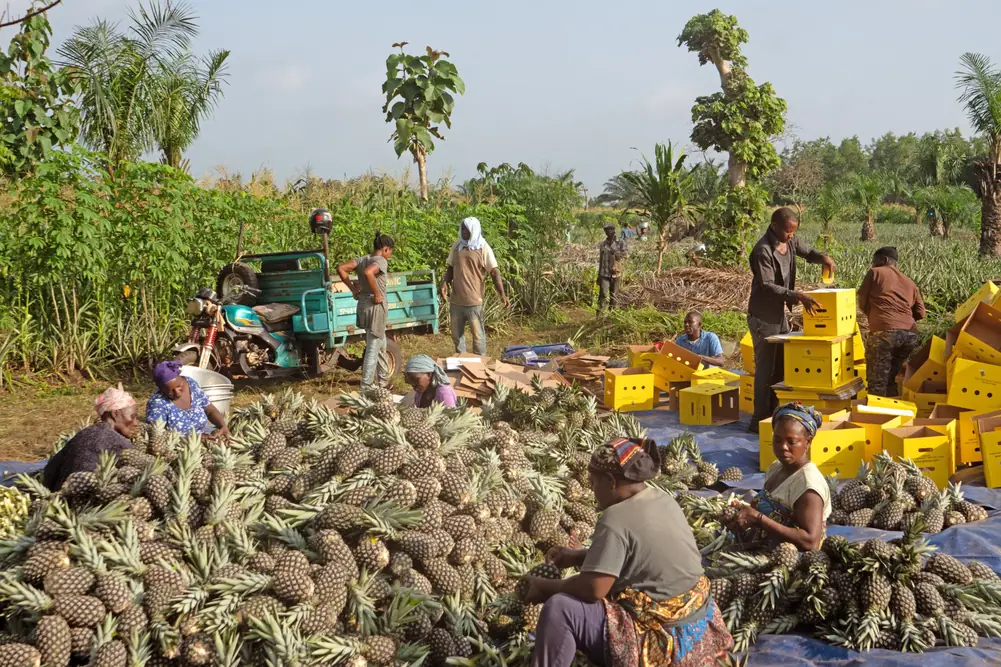
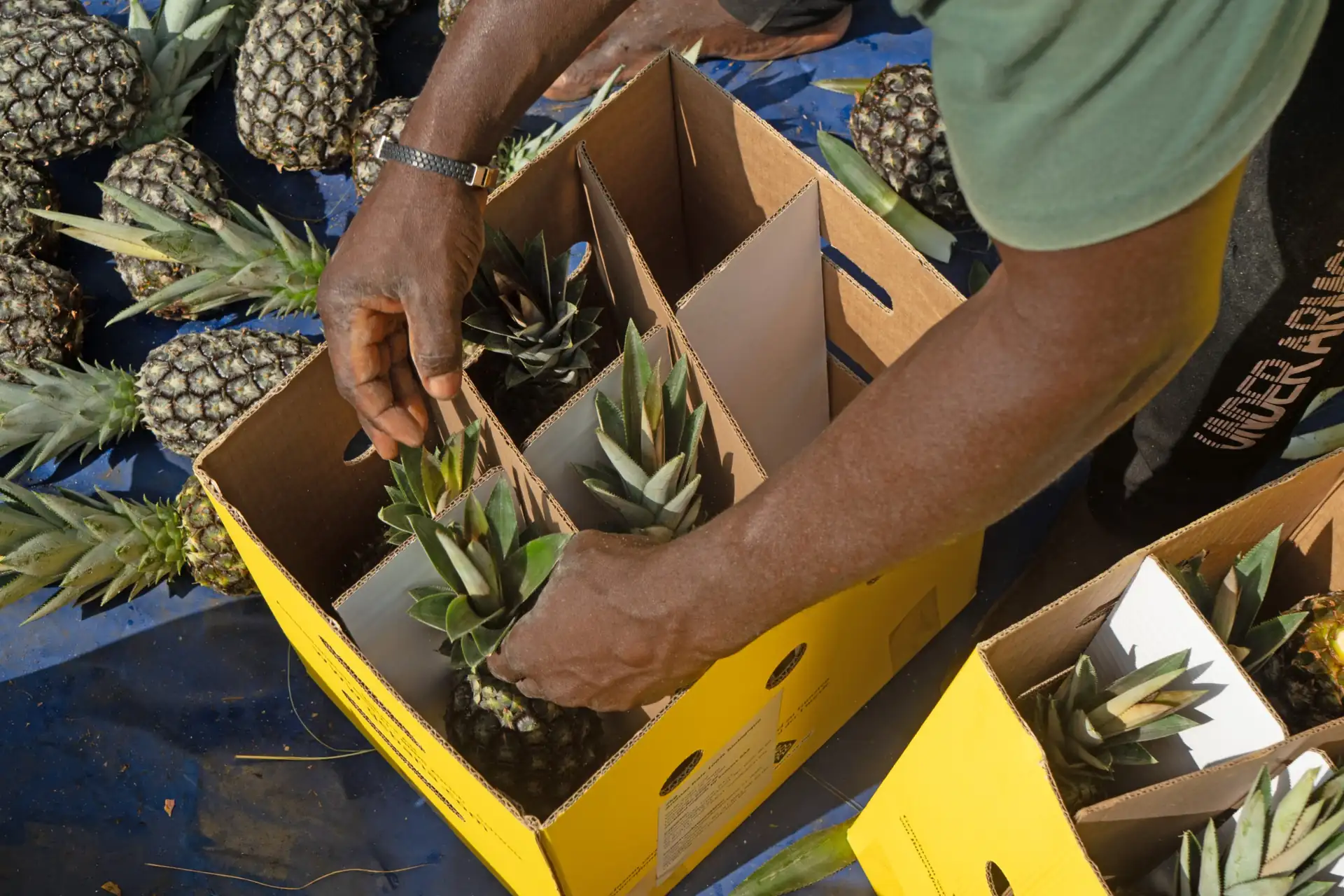
We offer fresh pineapples from November to March each year. During the harvest, the family farmers cut the pineapples from the spiky plants, clean them and pack them right there in the field into the yellow boxes that later arrive at your door.
How are pineapples dried?
Our long-standing partner Setrapal processes the pineapples for our dried fruit in Lomé, the capital of Togo. It involves a great deal of manual work.
Why does gebana share its revenue with the pineapple producers?
Since 2026, the pineapple producers in Togo have been part of the gebana model: in addition to the organic and Fairtrade purchase price, we pay them 10 % of the sales price of the fresh and dried pineapples in our online shop. This premium comes with no conditions attached. We pay it even if gebana makes a loss.
To pay out the premium, the field agents of gebana Togo travel in person to the villages in the growing regions. The family farmers receive the money in cash or on their mobile phones. Together with the cocoa producers, who are also part of the gebana model, we were able to pay out a total of €166'167 to 1'875 family farmers in 2026.
How can you use pineapple in the kitchen?
Dried pineapple is ideal for cooking, baking and braising. Finely chopped or puréed, it replaces sugar in many recipes. If the pieces are too dry, soak them in water for about an hour – after that, they work well in smoothies or cakes.
You should enjoy fresh pineapples soon after delivery. If you have left overs or damaged fruit, it is worth making a mango and pineapple chutney. Or you can pickle the fruit: our mango and pineapple pickles go well with a cheese platter or your next raclette.