
 Login
Login

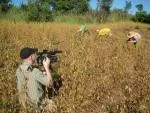
Lotti and Josef Stöckli are currently filming a documentary about soybean cultivation in Brazil. For this, they visited gebana Brasil and some organic soybean farmers in March. The following interview about their film and their work in Capanema was created in the process.
The films by Lotti and Josef Stöckli always have a social background. They focus on people who live on the margins, yet fight for a better life and do not succumb to fatalism. The Stöcklis' most recent work is a documentary about the struggle of the landless in Brazil. The film was honoured at the International North-South Film Festival in Geneva and was broadcast by various European television stations.
1. Lotti and Josef Stöckli, what is your film idea?
We will now visit various soybean-growing regions of Brazil during the harvest season, both small and large. Organic farming will be addressed as well as genetic and conventional methods. Opponents and supporters of the RTRS (Round Table for Responsible Soy) will also be heard. Which message will stand at the center in the end and where the priorities will be set cannot yet be decisively said, because filming has only just begun.
2. How important is the soy issue to you?
Soy is a miracle bean, but unfortunately has many downsides, ecological and social. In Brazil already one third of the total arable land is planted with soy, about 21 million ha in total, and several million hectares are expected to be added in the coming years. The Cerrado and the Amazon region are especially in the line of fire. Soy expansion increasingly leads to land conflicts, expulsions and illegal land grabbing. Land concentration is increasing, primary forest is being cleared, animals and plants are disappearing. The cultivation of staple foods is declining, prices are rising, and the local population loses out.
Switzerland imports about 250,000 tons of soy annually for the production of animal feed, almost all coming from Brazil. Consumers want to eat meat and eggs that are not genetically contaminated and Brazilian soy is said to meet these requirements. Whether that is true is more than questionable: experts say that in Mato Grosso already half of the production is GM soy and in Rio Grande do Sul it is already over 90%. The film should also establish a connection to the importing countries, including Switzerland.
3. How did you experience the soy production of the local smallholders?
Cinematically we focus on the work of a single producer. He is an organic smallholder who, unlike most others, still cuts with a sickle. He obtains the seeds from gebana and uses a threshing machine that he does not lend to other farmers. The whole family helps with the harvest and the weeding requires a great deal of time. What the GMO soy producer destroys with his glyphosate in one hour, the smallholder needs a whole week for. He is happy to take on this extra work. This way he ensures that his soy is not contaminated by GMOs, the soil remains fertile, his soy is of high quality and he gets a good price for it.
4. What impressed you most here in Capanema?
We are impressed by the good cooperation between gebana and the small soybean farmers. We have heard several times that the organization gebana is a great help to them. The small producers greatly appreciate that their concerns are taken seriously, that they are supported with advice and practical help, and that they are fairly compensated for their products and their work.
5. Would you like to add anything at the end?
Yes, we would like to warmly thank Gebana for their spontaneous willingness to assist us with the filming. Without the ongoing support and accompaniment the film work would not have been possible.
And one more thing: opinions, comments and suggestions for our soybean film project are very welcome: [email protected]