
 Login
Login

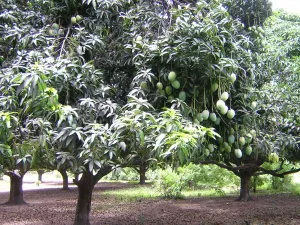
Especially in the dry Sahel zone of Africa, mango trees provide welcome shade. The tree also protects the soil from erosion. In Burkina Faso, where gebana Afrique is based, trees are an important factor in the fight against desertification and the spread of the Sahara.
Variety of cultivars
That one apple is not the same as another, but that Grafensteiner, Boskop or Berner Rose taste very different, is self-evident to us. That there is an even greater variety of mango varieties is less well known here. I myself was surprised during my stay in Senegal at how different the various mangoes can be: sometimes sweet, sometimes slightly tart, sometimes juicy, sometimes very fibrous, large or small… It is estimated that there are around 1,000 mango varieties in India. The color of mangoes also ranges from green to yellow to red depending on the variety. However, it does not indicate the ripeness of the fruit. You can tell that by the firmness and the smell. At gebana, two mango varieties are available: the tart Amélie, which ripens from April, and the sweet Brooks, which ripens a little later.
Surplus and Drying
A large mango tree drops tons of fruit each year. However, all the fruit of a mango variety ripen within a short period. Mangos are also difficult to store and transport. Appropriate preservation methods can make proper use of this temporary surplus. Mangos are processed into juice, jam, or chutneys. Especially suitable for storage and simple, ecological transport are dried mangos. Processing the mangos leaves additional value added for the small producers. gebana Afrique also supports the small farmers in Burkina Faso through agricultural advice, improvement of processing methods and pre-financing.
Source and a more detailed version of this article at:http://www.biothemen.de/Qualitaet/tropen/mango.html