
 Login
Login

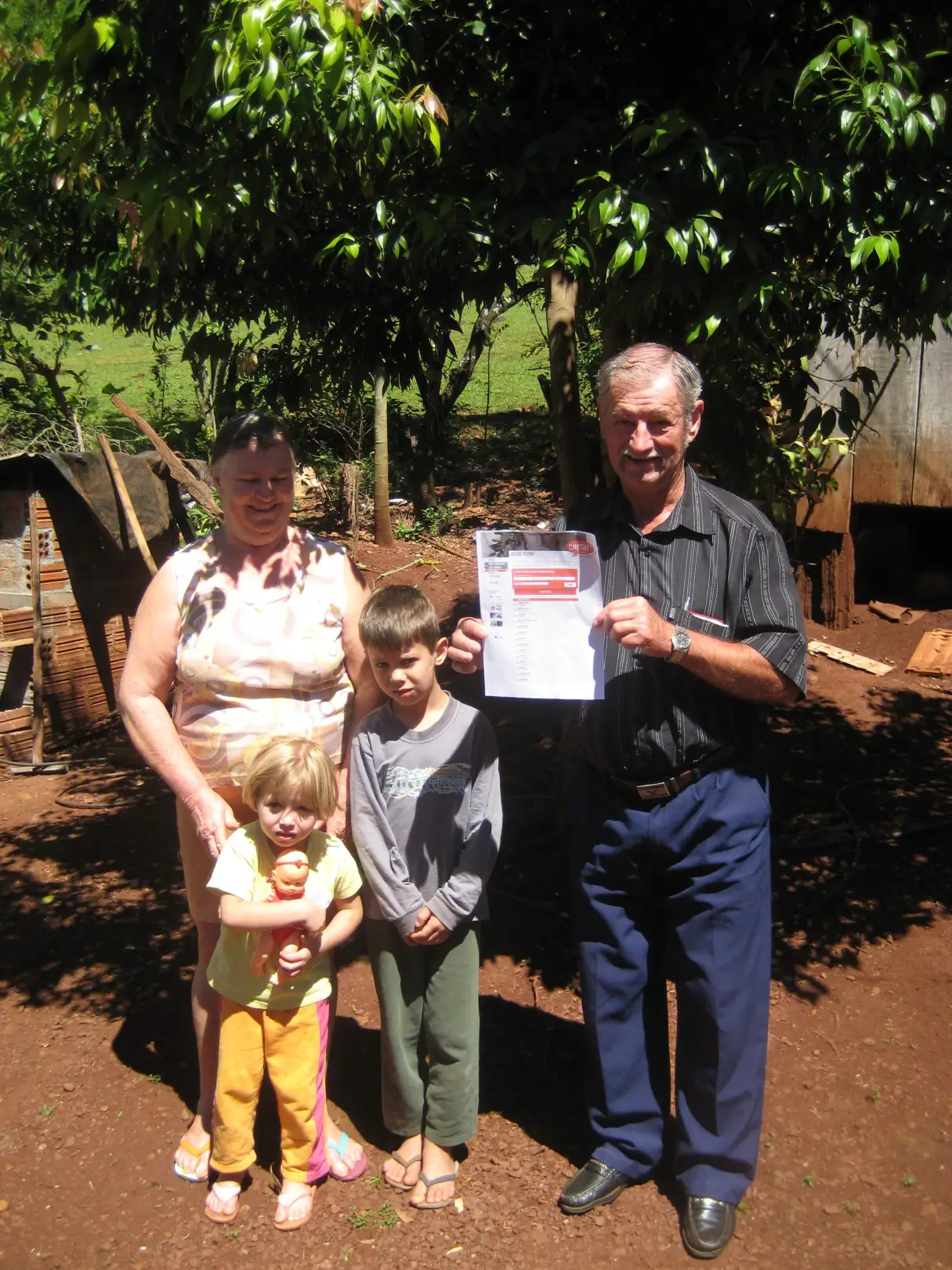
“I spent the past weeks in Capanema and held many meetings and emergency sessions on the subject of endosulfan. The staff of gebana Brazil and the organic farmers are very pleased with the success of the CHEGA! campaign. They can hardly believe that people around the world are showing solidarity with their fight against the pesticide endosulfan. They are used to being considered last.
There are initial positive developments, such as the ban announced by the Brazilian authorities starting in 2013 - but that is too late for the organic farmers in Capanema. That Bayer CropScience has withdrawn its product Thiodan from the market (remaining stocks were collected from the local cooperative Coagro in August) is also an important step. It is very encouraging that the regulatory authority ANVISA is receptive to our concerns. In this way we reach the right bodies with our demands.
But the problem with endosulfan is not yet solved for the organic farmers. Unfortunately, there are still suppliers of endosulfan - from Israel, India and from Brazil itself. The local pesticide outlets are already buying for the upcoming sowing - including large quantities of endosulfan. As feared, the poison is being offered even more cheaply - probably because of the ban from 2013. Since the farmers in Capanema are poor, the price will also tempt them to treat the next harvest. Their neighbors, who farm organically, will again be the ones to suffer.
Therefore we will try to slow down the sales of endosulfan by informing the local sellers about the problems caused by its use. We will also remind them of the legal conditions that oblige them to obtain a declaration from the farmers proving that they have sufficient training and are aware of the danger of the poison. Contrary to the manufacturers' claims, no one does this. This could be a means to put pressure on sellers and manufacturers.
What happened to the produce from the 2010 harvest? The confusion over whether the produce is organic has now (after half a year!) largely been resolved by the authorities and control bodies: if the values are above 0.01 ppm, it must be investigated whether a farmer applied endosulfan himself and whether he did everything possible to prevent drift from the neighbor. After these elaborate clarifications (for each of the more than 300 farmers!), the produce is released for sale as organic depending on the findings. Of course, customers of food-grade soy still do not want soy with residues. So it will probably have to be sold as feed soy. The resulting losses are enormous. It is therefore also my task to talk to the funders, reassure the banks and devise rehabilitation plans.
The situation leads to feelings of powerlessness and anger. The reckless pesticide manufacturers sell endosulfan to the poorest corners of the world, although it has been known for 20 years how harmful the poison is. The bureaucratic system of organic control and the authorities makes it almost impossible for small farmers to farm organically. If farmers report the problem of residues, they are controlled even more strictly. Due to unavoidable external influences, organic farmers therefore have to spend huge sums to prove correct cultivation, even though they have already been inspected. For a farmer with 1 ha of soybean cultivation, the costs for control bodies and analyses amount to 30% of the crop value! And finally they are required to give up large areas from their small plots to increase the distance to their neighbors - although in the case of endosulfan it has been shown that this does not help.
And the consumers, for whom all this effort is ultimately made? I am sure that 95% of people, like us, believe that it is more important that thanks to the organic farmers in Capanema year after year less highly toxic endosulfan enters the environment (around 500 kg of active substance/year), than that the organic soy must show no traces of endosulfan, which are twenty times below the limit for food. I am convinced they support organic farming in Capanema and the farmers’ fight against endosulfan.”