
 Login
Login

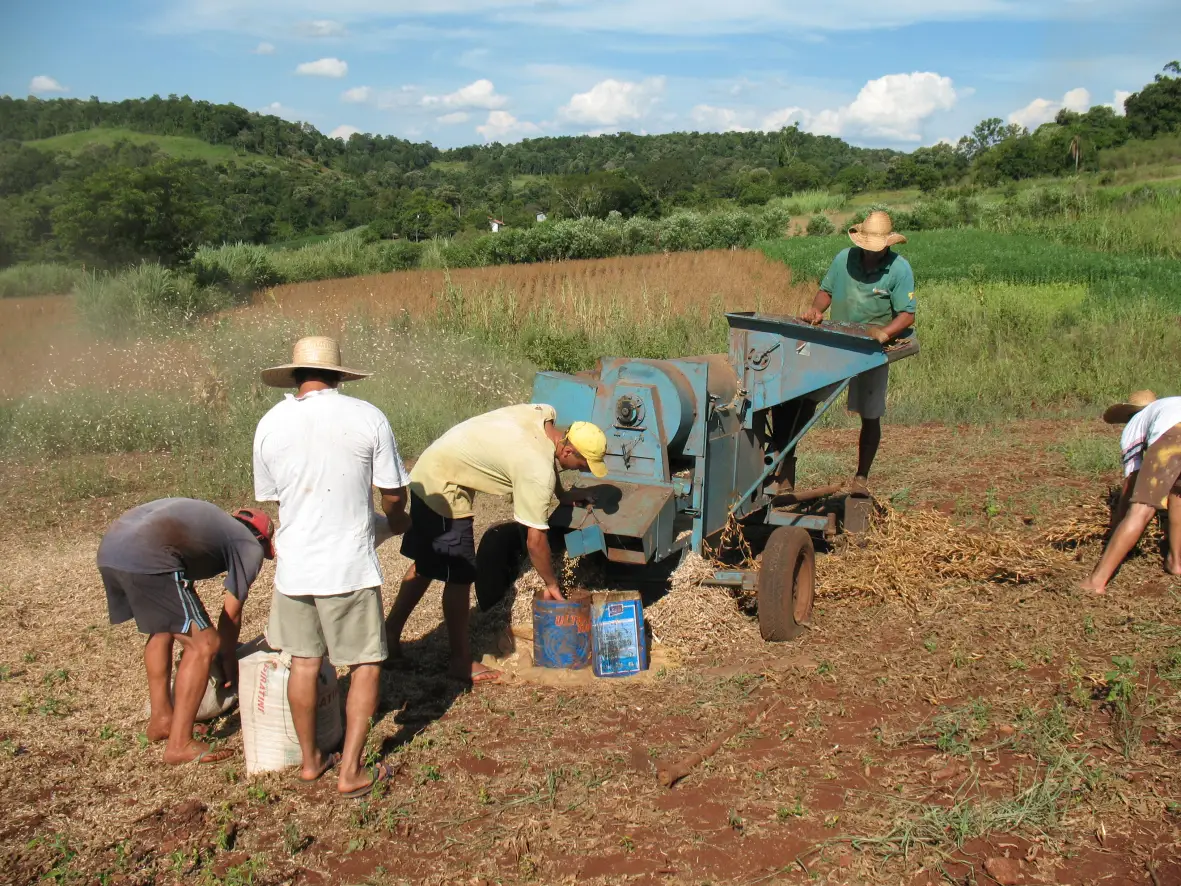
In July this year the prospects for the organic farmers of the Capanema region in southern Brazil were bleak. Due to past losses, the financial institutions cut off credit to their buyer, the organic and Fairtrade company gebana Brasil. The company faced closure – and with it around 250 smallholder families who farmed their fields organically.
In recent months the Swiss partner company gebana AG desperately sought solutions to save gebana Brasil and smallholder organic farming in southern Brazil. A restructuring plan was drawn up and discussions were held with previous and new investors. Not only private lenders, but also soy customers and even institutional financiers were willing to support the company:
Some investors waived a large part of their claims, others converted them into equity. Individual customers are financing the seed and organic fertilizer for the next sowing – and this without further collateral. Thanks to this commitment the farming families of Capanema can sow GMO-free organic soy again this year. The rescue came literally at the last second: in time for the new sowing date in October.
In addition to customers and private investors, the sustainability-oriented financial institutions Oikocredit and responsAbility, as well as the Dutch NGO ICCO, in particular helped ensure that "South America’s island of organic soy", as the NZZ headlined in a report, will not disappear from the map.
Background
Traces of the pesticide endosulfan were found in 2010 in the organic soy of smallholders in southern Brazil. The poison migrated from conventional agriculture into the environment, was taken up by the organic soybeans and drastically reduced their market value. Together with gebana the farmers fought back and launched the campaign "Chega – Smallholders against Pesticides" (www.chega.org). Endosulfan was eventually banned in Brazil as well and the existential problem for the organic farmers was thereby solved. Although the problem was resolved and demand for organic soy increased, gebana Brasil still faced bankruptcy in the summer of 2012. This was a delayed consequence of the losses from the pesticide contamination and the subsequent credit freeze by the banks.