
 Login
Login

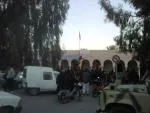
A month ago Tunisians drove out their dictator and overnight they were transformed not only in the Arab world from the ridiculed, tame people into a revolutionary role model. In recent days and weeks attention has turned to Egypt, which was encouraged by the Tunisian example. Meanwhile a new society is being built in Tunisia.
The democratic revolution in Tunisia also has effects on gebana. For weeks we have been in daily contact with our partners at gebana Maghreb.
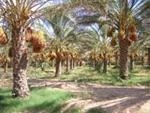
Transitional council organizes regional elections
“All entrepreneurs who did not participate in the party and are not part of the ‘famille’ (i.e., belong to the clientele of the former government) gathered last week and formed a council. I am part of it too,” Taieb Foudhaili says modestly, but somewhat proudly. “Unfortunately I therefore cannot attend the gebana meeting for quality training in Switzerland this month. But don’t worry, we will not neglect quality — on the contrary, we want to show that a free Tunisia delivers even better dates!
The council first collected signatures from the population for legitimacy. Then we went to the local administrative authority and informed them that they have been deprived of trust. First, we secured all dossiers so that the traces of past injustices cannot be erased. Our second task is to organize new elections for the new local administration within 45 days. This can and must proceed faster than the national elections. The work has started very well and the entire population supports us.”
Active rebuilding
Taieb Foudhaili is somewhat more worried today than immediately after the dictator and his clan fled. Back then the enormous joy at finally being able to speak freely was palpable. But then there were initial setbacks. The revolution threatened to be outwitted: “The government appointed new local governors last Friday. Here in Kebili, as in many other places, someone from Ben Ali's party, the RCD, was appointed again. That was too much for the people: they protested against it. In the process, Rami El Abed, a young man, was killed by the police. A policeman had fired the tear-gas cartridge directly at his head. Afterwards the people attacked the police stations near our company. Nevertheless, the situation remained under control. The people set the police stations on fire; the bank that stands between two parts of the central station and also our company remained completely unharmed. That shows that the people acted very deliberately. Already two days later those same young demonstrators had repainted the partially burned police station. In the police stations we found files on regime critics and people who pray regularly. It becomes clearer every day that under the dictatorship everything was exactly as bad or even worse than one had suspected.
Cooperating with small farmers: the right decision
Now a new era is dawning for us date producers and exporters, and I am very optimistic. Many laughed at us because we wanted to work with the small and modest farmers; now this decision will bear fruit: some of our biggest competitors were favored by the government. They built illegal wells on huge plantations and thus could produce more cheaply. For the water supply, on which our existence here at the edge of the desert depends, this was a great threat. In recent weeks landless farmers have occupied such plantations and divided them among themselves. But I say that only because of the demand, not because I am glad. We want to be modest in victory and not humiliate the beneficiaries of the former regime unnecessarily. However, I do think we can be proud of the right decision for fair trade and cooperation with small farmers from the start. For us it is now most important to continue working as usual and also that our friends and partners do not lose their trust in us.”