
 Login
Login

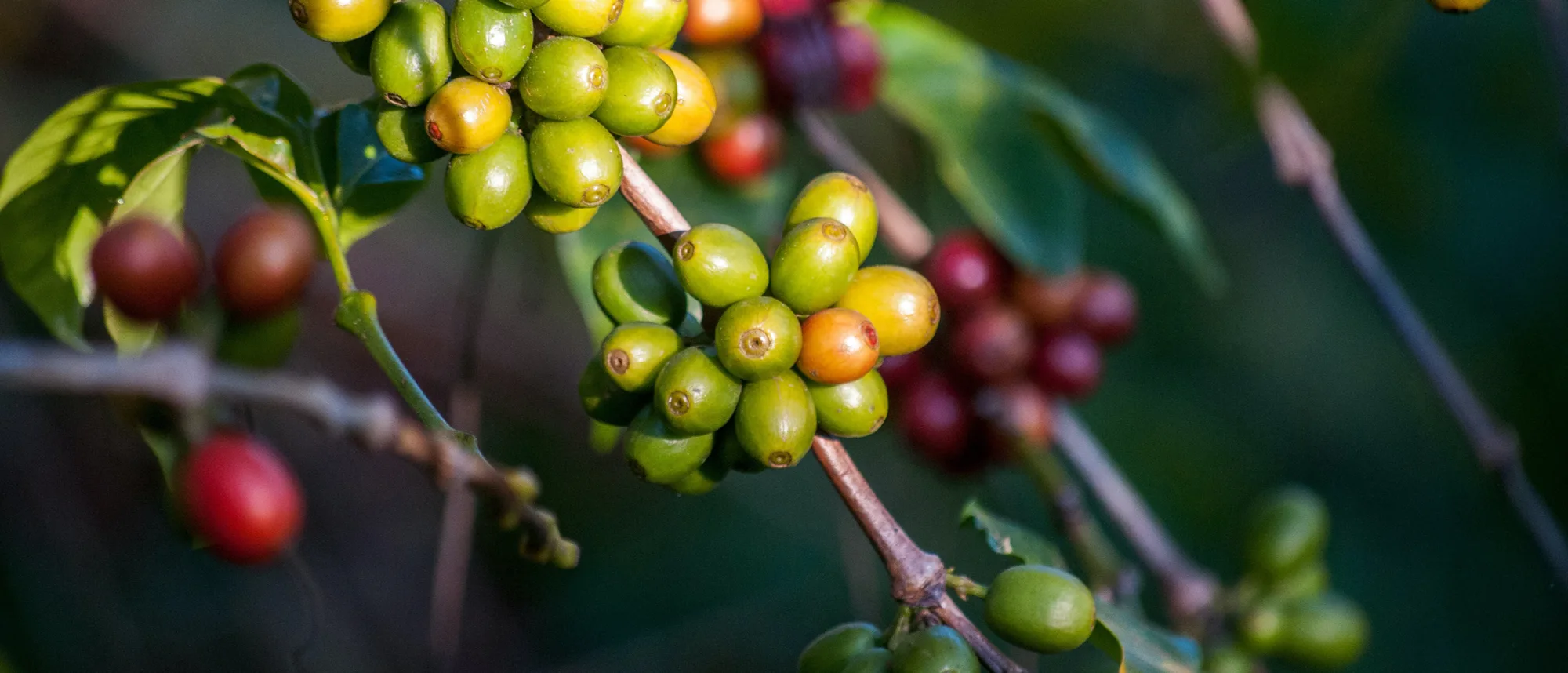
We started working with the Asprovega and Asproaurora coffee cooperatives in Colombia at the end of 2021. The members of these cooperatives use a new processing method to produce their coffee known as honey processed.
Until recently, the dry process and washed process have been the dominant processing methods used in coffee production. The honey process combines elements of both techniques to create new aromas and subtle differences in flavour. And compared to washed coffee, this method also requires less water And compared to washed coffee.
Dry processed coffee
Dry processed coffee is made by leaving the harvested and sorted coffee cherries to dry in the sun. In other words, the beans are still completely encased in the fruit. During the drying process, this fruit will undergo a transformation similar to that of a grape turning into a raisin. This can take up to 4 weeks. During this time, the fruit naturally begins to ferment. Complex flavours and sugars then develop, ultimately imparting our coffee with fruity notes reminiscent of berries or citrus. Since this is the traditional processing method, these coffees are also known as natural coffees or naturally processed coffees.
Washed coffee
To produce washed coffee, the pulp is completely removed from the coffee cherries after sorting. This process is also known as pulping and is usually done by machine. After pulping, the beans are washed and then placed into fermentation tanks for between 12 and 72 hours. Once the fermentation process is complete, the beans are washed again to remove any remaining pulp. Finally, the beans are left to dry in the sun for 8 to 10 days. Today, this is the mostly widely used processing method.
Honey processed
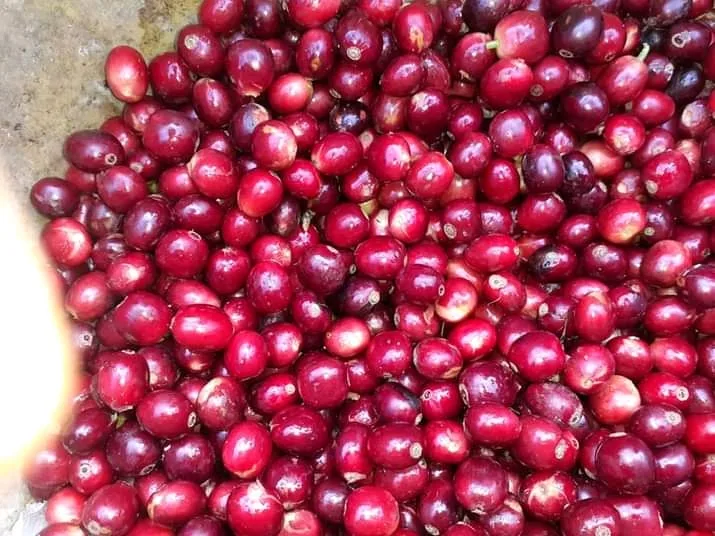
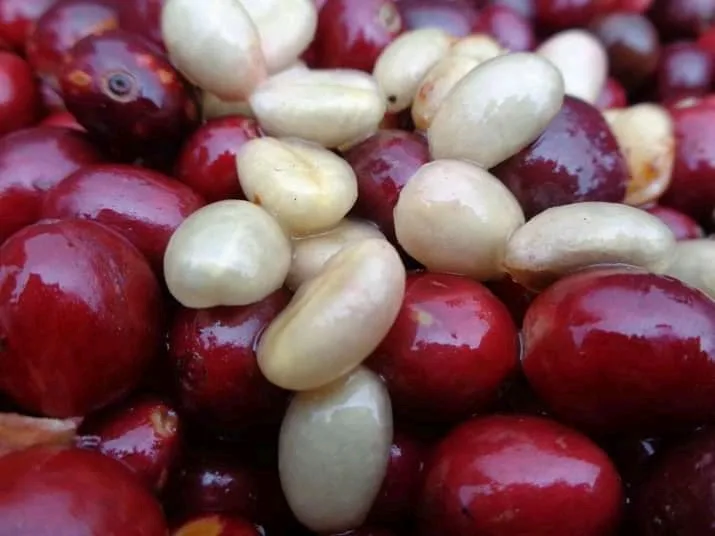
To make honey processed coffee, the pulp is removed from the coffee cherries after sorting, just as it would be for washed coffee. However, the key difference is that the beans are not washed after pulping. Instead, they go straight to the drying and fermenting stage. As a result, there are still traces of fruit pulp attached to the beans. This residue has a consistency similar to that of honey, lending this processing method its name.
It's also this sticky layer of residual fruit that lends the finished coffee its flavour profile. Similar to dry processed coffee, complex flavours will develop during the fermentation process, resulting in intense fruity notes. Since the beans are not washed before or after fermentation, this processing method doesn't use a lot of water. As with dry processing, water is only used to sort damaged or unripe coffee cherries and to remove dirt from the fruits.
Yellow, red and black honey processing
Honey processing can be further broken down into three categories: yellow, red and black.
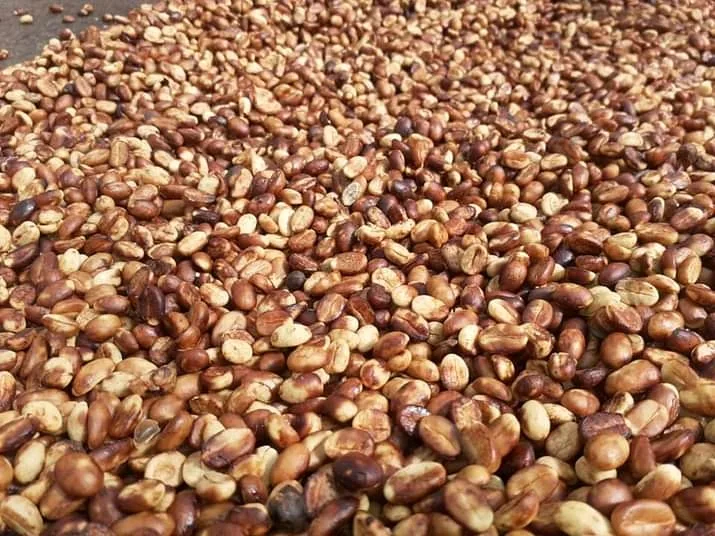
Yellow refers to the quickest processing method. Once the beans have been sorted and pulped, they are immediately placed in the sun to ferment and dry. After around 8 days, the beans turn light yellow and have achieved their ideal moisture content of 12.5 per cent.
For red honey coffee, the beans are dried on cloudy days. This prolongs the fermentation process, and the residual fruit turns red due to the extended period of oxidation.
To make black honey processed coffee, producers try to leave as much fruit residue on the beans as possible. The beans are then dried on racks covered with dark or black tarpaulins. This prolongs the fermentation and drying process, the fruit residue turns black, and the beans develop a more intense fruity aroma.
Generally speaking, the longer the drying process takes, the more the beans ferment and the more pronounced the coffee's fruity aromas will ultimately be.
Trocken verarbeiteter Kaffee
Für trocken verarbeiteten Kaffee lassen die Produzent:innen die sortierten Kaffeekirschen nach der Ernte in der Sonne trocknen. Die Bohnen sind also noch vollständig von der Frucht umgeben, die sich im Verlauf des Trocknungsprozess ungefähr so verwandelt wie Weintrauben zu Rosinen. Das dauert bis zu vier Wochen. Während dieser Zeit beginnen die Früchte auf natürliche Weise zu fermentieren. Es bilden sich komplexe Aromen und Zucker, die dem Kaffee in der Tasse am Ende Fruchtnoten verleihen, die an Beeren oder Zitrusfrüchte erinnern. Man nennt diese Kaffees auch Naturkaffees oder natürlich verarbeitete Kaffees, da es sich hierbei um die traditionelle Verarbeitungsmethode handelt.
Honey processed coffee at gebana
We source our coffee from the Asprovega and Asproaurora cooperatives in Colombia. The members of this small cooperative produce their coffee in harmony with nature, but they have no official organic certification. The 9 producers argue that certification is too expensive and doesn't add any value to the product. We believe that this very much depends on context. Certification is valuable to us when we're not able to work together on the basis of trust, like when we don't have any direct contact with the producers.
Asprovega and Asproaurora have chosen the honey processing method as it requires less water. The cooperatives process their coffee at a central location – the farm of one of their members. They create jobs for around 25 seasonal workers. Most of the workers are women and each processing step is carried out by hand.
Asprovega and Asproaurora supply us with yellow honey coffee. Depending on the weather, the beans ferment for between 12 to 18 hours, drying in direct sunlight. Once the beans arrive in Switzerland, they're sent to the Rast Kaffee roastery where they are roasted to create a cafe creme that produces a thick, dark crema reminiscent of caramel. On the nose, a nutty fragrance unfolds with just a hint of marzipan; on the tongue, it conveys a gentle bitterness with pronounced berry aromas. On the palate, it delivers full-bodied flavour with lingering fruity notes.
The beans are also suitable for making espresso. However, this will intensify the fruity notes, resulting in a coffee with prominent acidity that still blends well with the bitterness. An espresso made from these beans has a fairly light crema.
Honey processed coffee is available in our online shop in 500-gram packs. For the time being, the coffee is only available as whole beans.
Sources:
https://beans.at/en/kaffeewissen/kaffeeernte-kaffeeverarbeitung/trockene-aufbereitung-kaffee (accessed on 22 March 2022)
https://bigislandcoffeeroasters.com/blogs/blog/what-is-a-honey-processed-coffee (accessed on 22 March 2022)
https://www.kaffee-partner.de/de/magazin/lesen/was-ist-honey-processed-kaffee (accessed on 22 March 2022)
Honey Processed
Für Honey-Processed-Kaffee entfernen die Produzent:innen nach dem Sortieren genau wie bei gewaschenem Kaffee das Fruchtfleisch der Kaffeekirschen. Der entscheidende Unterschied ist, dass sie die Bohnen nach dem Pulping nicht waschen, sondern direkt zum Fermentieren und Trocknen auslegen. Das bedeutet, dass immer noch Reste des Fruchtfleisches an den Bohnen hängen. Dieser Rest hat eine an Honig erinnernde Konsistenz, was der Methode ihren Namen verleiht.
Dadurch, dass der Fruchthonig an den Bohnen klebt, entfalten sich bei der Fermentation ähnlich wie beim trocken verarbeiteten Kaffee komplexe Aromen, die dem fertigen Kaffee am Ende intensive Fruchtnoten verleihen. Da das Waschen vor und nach der Fermentation wegfällt, ist der Wasserverbrauch dieser Verarbeitungsmethode gering. Wie bei der trockenen Verarbeitung kommen die Bohnen nur mit Wasser in Kontakt, um beschädigte oder unreife Kaffeekirschen und Schmutz zu entfernen.
Yellow, Red und Black Honey Processing
Man unterscheidet bei der Methode des Honey Processzwischen den Varianten Yellow, Red und Black.
Yellow steht für die schnellste Variante der Methode. Die Bohnen fermentieren und trocknen nach dem Sortieren und dem Pulping direkt an der Sonne. Nach etwa acht Tagen haben sie eine hellgelbe Farbe und den idealen Feuchtigkeitsgehalt von 12.5 Prozent erreicht.
Bei der Variante Red lässt man die Bohnen an wolkenreichen Tagen trocknen. Dadurch fermentieren sie länger und der Fruchthonig verfärbt sich durch die längere Oxidationsphase rötlich.
Für Kaffee der Kategorie Black Honey Processed versuchen die Produzent:innen, möglichst viel des Fruchthonigs an den Bohnen zu lassen und trocknen sie auf Gestellen, die sie mit dunklen oder schwarzen Planen abdecken. Der Fermentations- und Trocknungsprozess zieht sich so in die Länge, der Fruchthonig verfärbt sich schwarz und mehr Fruchtaromen dringen in die Bohnen ein.
Grundsätzlich gilt: Je länger der Trocknungsprozess dauert, desto stärker fermentieren die Bohnen und desto mehr fruchtige Aromen erhält der Kaffee am Ende.
Kaffee Honey Processed bei gebana
Unser Kaffee kommt von den Kooperativen Asprovega und Asproaurora in Kolumbien. Die Mitglieder dieser kleinen Genossenschaft produzieren im Einklang mit der Natur, sind aber nicht offiziell bio-zertifiziert. Die Zertifizierung ist zu teuer, wie die neun Produzent:innen sagen, und produziert keinen Mehrwert für das Produkt. Aus unserer Sicht hängt das stark vom Kontext ab. Zertifizierungen sind für uns nützlich, wenn eine Zusammenarbeit nicht auf Vertrauensbasis möglich ist – zum Beispiel wenn wir keinen direkten Kontakt zu den Produzent:innen haben.
Asprovega und Asproaurora haben sich für die Verarbeitungsmethode des Honey Process wegen des geringeren Wasserverbrauchs entschieden. Die Kooperativen verarbeiten ihren Kaffee zentral auf dem Hof eines ihrer Mitglieder und schaffen so Jobs für etwa 25 Saisonarbeiter:innen. Es sind vorwiegend Frauen, die sämtliche Arbeitsschritte von Hand ausführen.
Asprovega und Asproaurora lieferen uns Kaffee der Variante Yellow. Die Bohnen fermentieren je nach Wetter 12 bis 18 Stunden und trocknen direkt in der Sonne. Nach der Ankunft in der Schweiz lassen wir sie bei der Rösterei Rast zu einem Kaffee Crème rösten, der eine dicke, dunkle, an Karamell erinnernde Crema erzeugt. In der Nase entfaltet er sich nussig mit entfernten Marzipannoten, auf der Zunge erzeugt er sanfte Bitterkeit und ausgeprägte Aromen von Beerenfrucht. Am Gaumen liefert er einen vollen Körper und ebenfalls Fruchtnoten, die lange erhalten bleiben.
Man kann die Bohnen auch für Espresso verwenden. Die Fruchtnoten sind dann allerdings sehr intensiv mit einer ausgeprägten Säure, die sich dennoch gut in die Bitterkeit einbindet. Espresso aus diesen Bohnen hat eine eher helle Crema.
Der Kaffee Honey Processed ist in unserem Onlineshop in 500-Gramm-Packung bestellbar. Vorerst nur als Bohnen.
Verwendete Quellen:
https://beans.at/de/kaffeewissen/kaffeeernte-kaffeeverarbeitung/trockene-aufbereitung-kaffee (abgerufen am 22.03.2022)
https://bigislandcoffeeroasters.com/blogs/blog/what-is-a-honey-processed-coffee (abgerufen am 22.03.2022)
https://www.kaffee-partner.de/de/magazin/lesen/was-ist-honey-processed-kaffee (abgerufen am 22.03.2022)