
 Login
Login

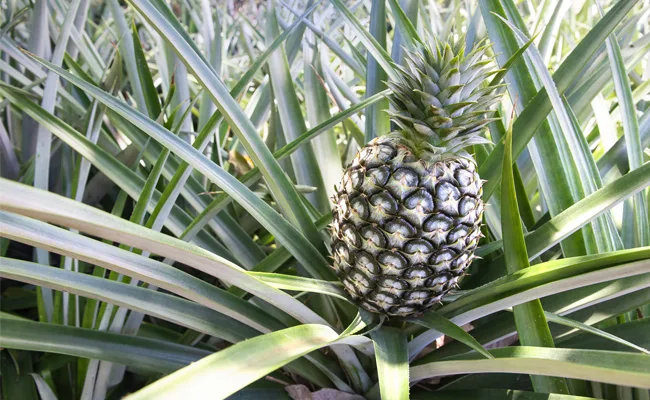
The shelf life is extremely short and the taste often unsatisfactory. This was shown by the customer survey we conducted during the pineapple shipment last winter.
Since we did not want to continue growing this fundamentally tasty, interesting fruit, we looked for alternatives. We found these in the variety “Sugar Loaf”: although its green exterior and white flesh do not match the common image of a pineapple, it is especially flavorful and juicy. The catch: its shelf life is even shorter than that of other commercial varieties.
Because we found a family business in Ghana that has production and export carried out according to the social and ecological standards of gebana “Sugar Loaf” and thus creates real added value locally, we decided to take a test: we are transporting this specialty by plane as an exception.
To offset the CO2 emissions generated by air freight, we plant cocoa trees in Togo — four for each box of pineapples sold. In our calculations we followed the schemes of specialists in this field, but generally used more generous estimates. This increases the product price, but guarantees CO2 compensation.
Nevertheless, the question arises: Do arguments such as an extraordinary product, creating sales for small farmers, and CO2 compensation justify transport by airplane?
We asked for your opinion and you responded. You can find the results of our short survey here on the blog. You can also find a detailed look at the challenge of CO2 compensation and how we deal with it.