 Login
Login

Cashews without detours
We process our cashews where they grow: in Burkina Faso. Unfortunately, this is a rarity in the global trade in these tasty kernels.
Our Cashew Nuts are Cracked Locally
About 90 per cent of cashew nuts from West Africa are shipped to Asia for cracking. The raw nuts are exported in their shells and weigh five times as much as shelled nuts, making this practice completely irresponsible from an environmental point of view. But diverting the nuts to Asia also means that the opportunity to create added value and potential jobs in West Africa is lost. Unfortunately, organic and Fairtrade-certified nuts are not excluded from this practice. You can read more about the issues facing the cashew industry in our article here or in this article by the Swiss magazine Beobachter (in German).
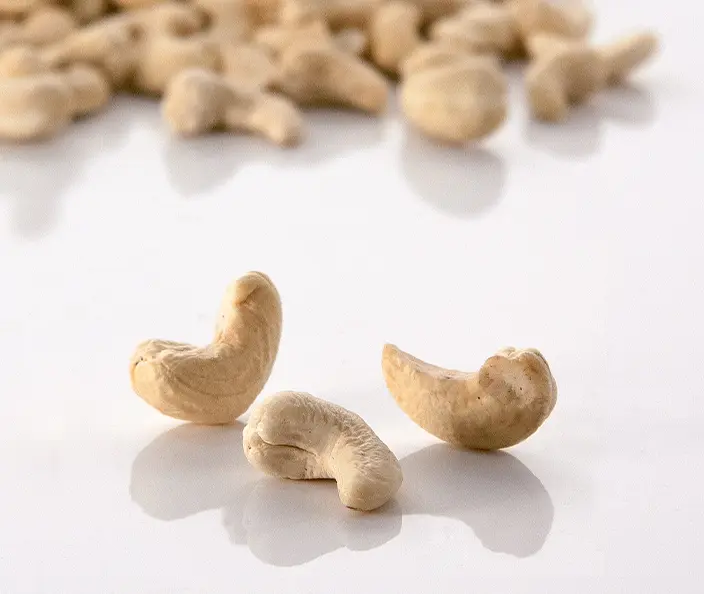
We have our own processing plant in Burkina Faso. The employees who work at our factory in Bobo-Dioulasso crack and package the nuts on site in preparation for direct export to Europe.
How are Cashews Processed?
Once the cashews arrive at our factory, they need to be heated, cracked, peeled and then sorted. Watch the video to see the labour-intensive steps necessary for us to enjoy our cashews:
Who processes the cashews?
About 90 percent of the work is done by a whole array of large and sometimes noisy machines. The team at gebana Burkina Faso takes care of the rest:
- The first machine calibrates and sorts the raw cashews by size.
- Freshly sorted, the cashews tumble into the so‑called cookers – essentially pressure cookers, just much larger than the ones we have at home.
- After cooking, they move on to the cracking machines.
- The sorting machine arranges the cashews according to cracking results and directs the cleanly cracked ones to the drying oven. The others go through a smaller cracking machine once again.
- After the drying oven, they pass through a kind of steam bath.
- Following the steam bath, they enter a peeling machine that removes the thin skin still surrounding the cashews after cracking.
So many machines – what’s left for people to do?
Because the machines don’t handle every cashew equally well, a considerable amount of manual work remains: cashews that cannot be properly processed due to their size or shape end up in manual processing. Currently, 80 employees crack nuts by hand, around 360 peel them, and 40 sort them.
Most of them are women. Many have no formal education and face challenges finding jobs with good working conditions. Employment in our factory provides women with a stable income, employment contracts, and social and health insurance. Workers with children benefit from an on‑site daycare centre and a health station.
In addition, 20 qualified technicians work at gebana Burkina Faso, operating and maintaining the machines. It’s the first time we have had this level of expertise within the company.
Due to its size, our factory is no longer located in the city but a fair distance outside Bobo-Dioulasso. Many employees now depend on public transport to get to work. To ensure this works as smoothly as possible, we have signed a contract with the local public transport operator. The company runs one to two extra trips per day for us.
Who Grows Our Cashews?
We buy raw cashews from over 2000 family farmers in Burkina Faso (as of 2022). Around 20 field agents pay regular visits to the families and maintain direct contact with them. They support the families in obtaining organic certification and train them in organic farming methods.
Since 2019, we have been paying our family farmers in Burkina Faso a 10 per cent share of the revenue we generate by selling their cashews in our online shop. This money is paid in addition to the organic and Fairtrade price as part of our gebana model.
Every kernel counts
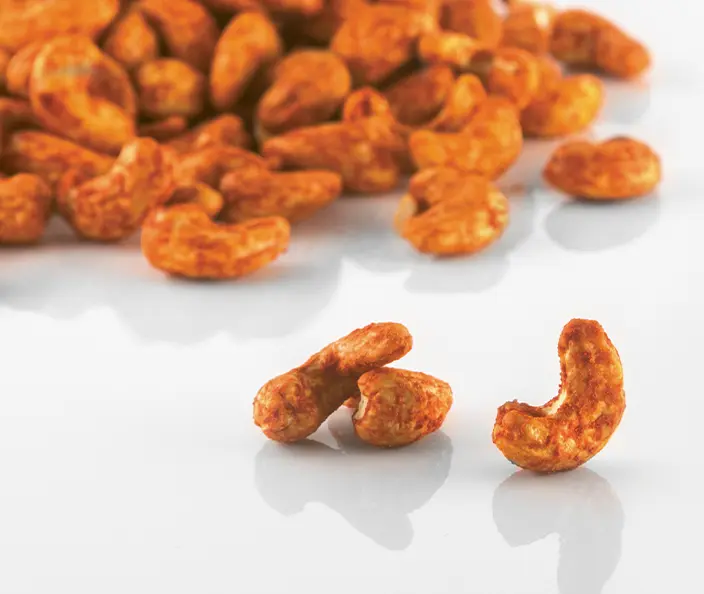
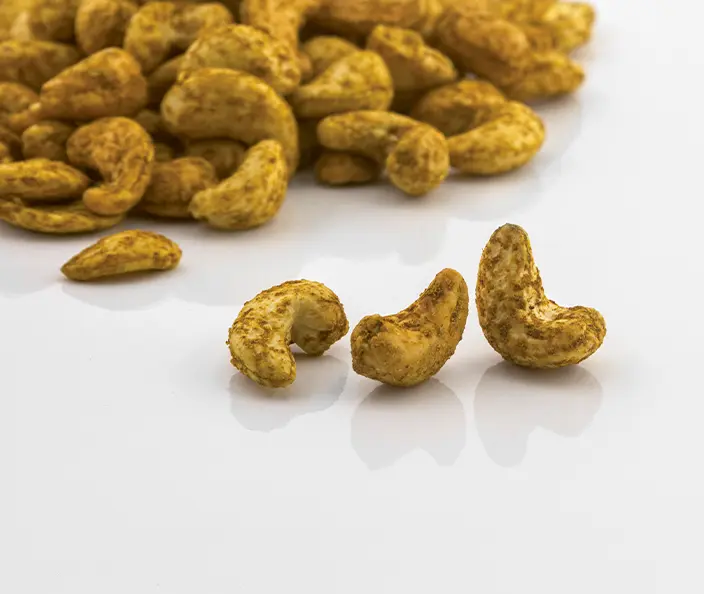
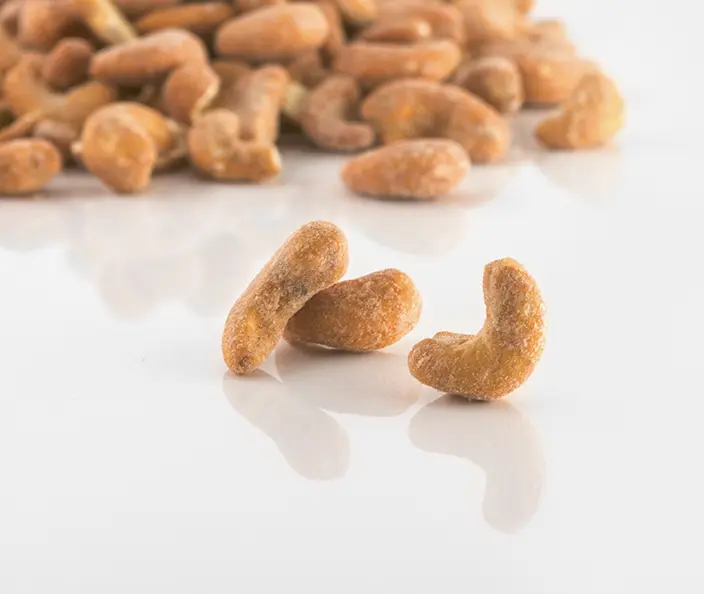
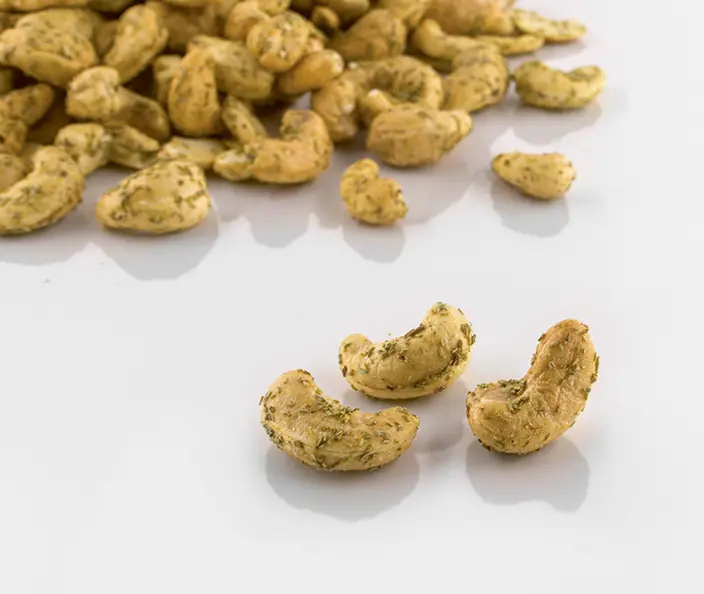
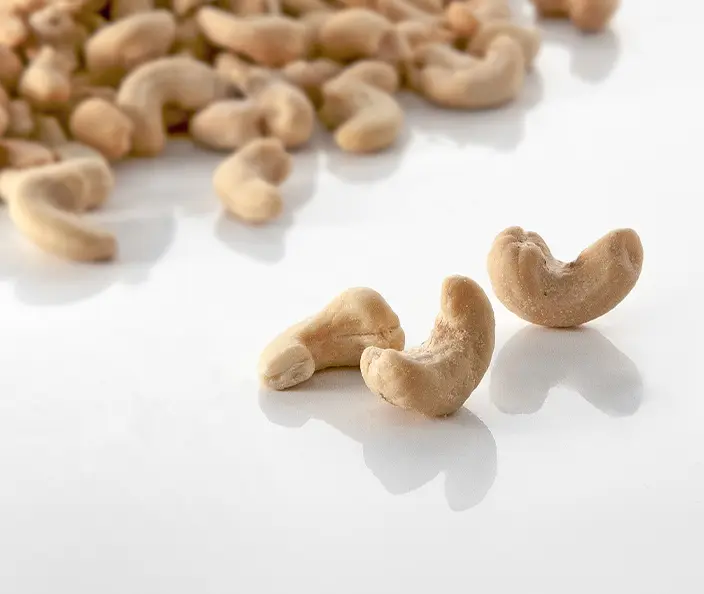
In our online shop, you'll find whole cashew nuts and seasoned cashews, as well as by-products of cashew production: partially broken kernels, kernels processed into flour, cashew butter and dried cashew apples.
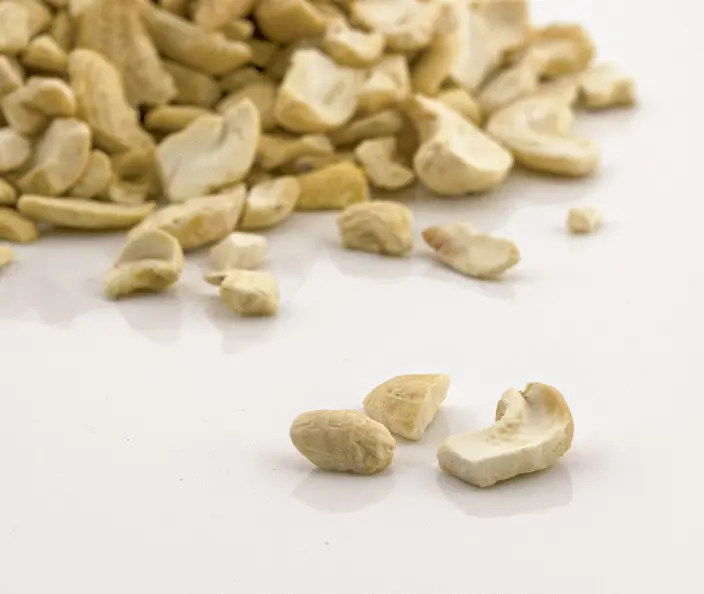
When cashews are cracked and peeled, there are always nuts that get broken. These cashew pieces are less valuable to retailers than whole cashews. This means we can offer them to you at a slightly lower price.
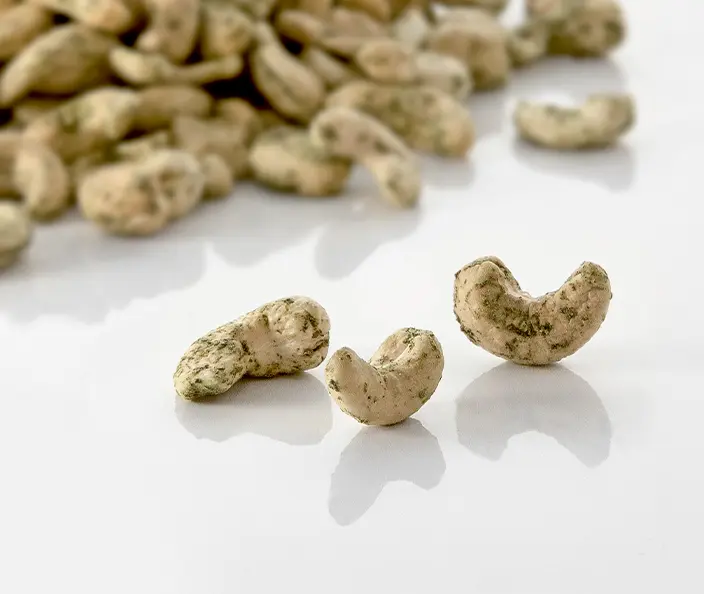
Ground cashews are generally not available in supermarkets. This product is made from tiny fragments of broken cashews and nuts that don't look quite perfect. Grinding these cashews into flour creates more added value locally. You can use it for baking, just like you would almond flour.
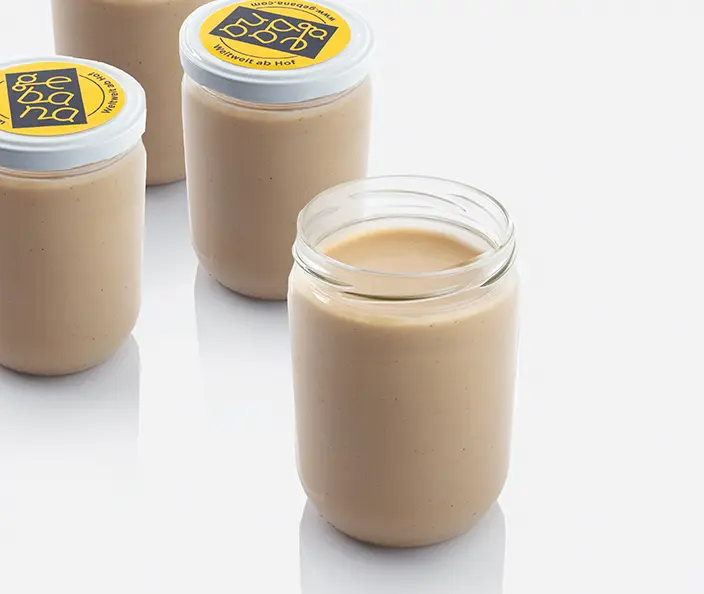
Our cashew butter tastes great on a slice of bread or as a topping over your morning muesli. And the cashew apple, the swollen fruit stem on which the nuts grow, is available in our shop as dried fruit.